
Family transfer checklist: baby seats, ski bags, Geneva

TL;DR:
Pre-booking child seats, organized ski bags, and private transfers ensure a smooth family ski journey from Geneva. Families must confirm child seat requirements and pack ski equipment strategically to avoid logistical issues at the airport. Choosing private services like Alpy guarantees seat availability, dedicated space, and timely arrivals for stress-free travel.
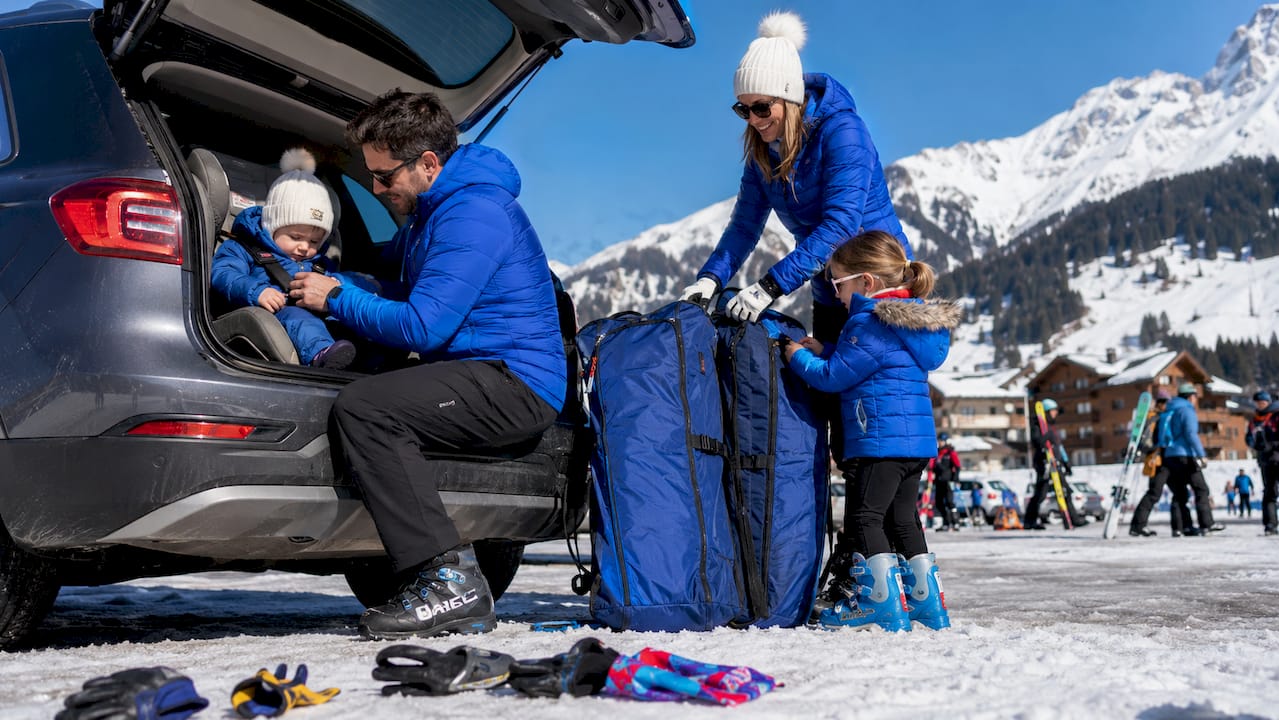
The essential family transfer checklist from Geneva covers baby seats, booster seats, and ski bags as the three non-negotiable pillars of a stress-free ski trip with children. Get these right before you leave home, and the journey from Geneva Airport to resorts like Courchevel, Val d’Isère, or Verbier becomes the opening act of a brilliant ski holiday rather than a logistical ordeal. Get them wrong, and you’re that family blocking the transfer bay, frantically rearranging bags while the driver waits. This guide gives you the complete winter sports family checklist, built specifically for families departing from Geneva with children of all ages.
1. Baby seats, booster seats, and ski bags: the Geneva transfer checklist
The single most important rule for family ski transfers is this: child safety seats and ski equipment must be confirmed with your transfer provider before you arrive at Geneva Airport, not on the day. Child seats require advance notice to secure appropriate vehicle configurations, and availability depends entirely on your child’s size and the vehicle type. Families who assume seats will simply “be there” are the ones standing in the cold outside Terminal 1 with a confused toddler and two ski bags.
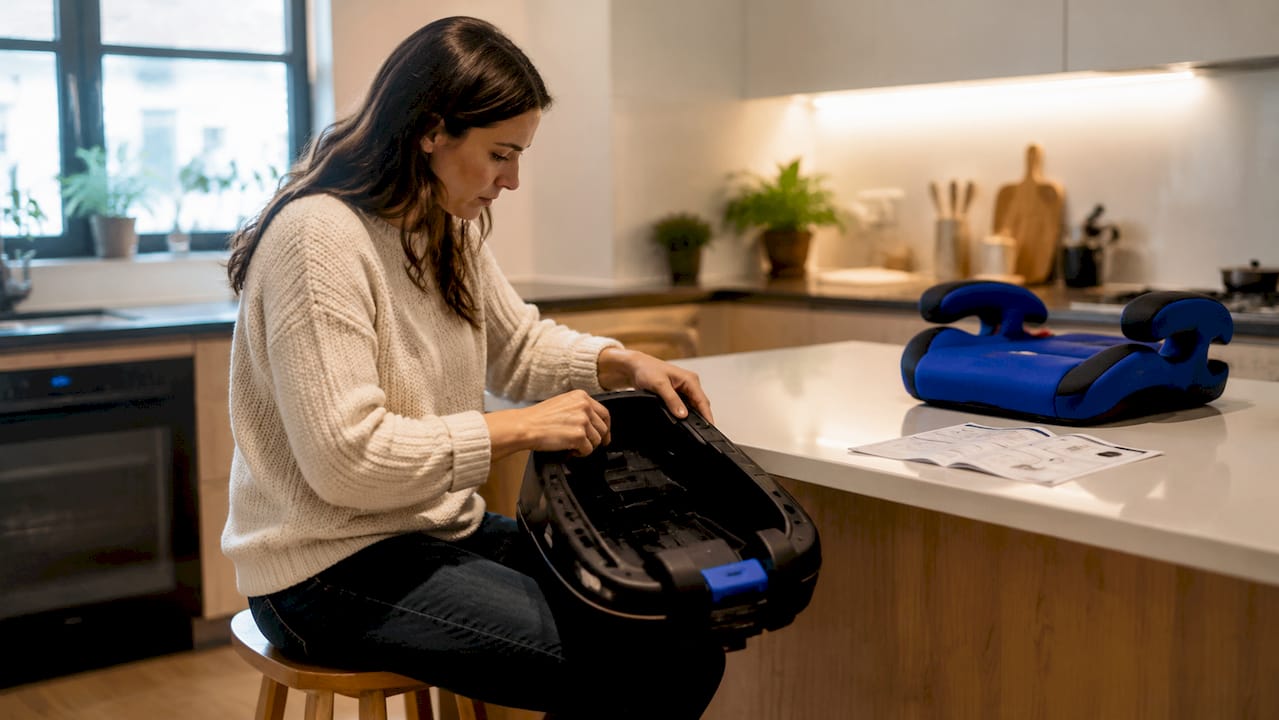
The checklist breaks into three categories: infant and baby seats for children under 13 kg, booster seats for children roughly between 15 kg and 36 kg, and ski equipment bags covering skis, boots, helmets, and clothing layers. Each category has its own planning logic, and combining all three into a single transfer requires coordination that rewards preparation.
2. How to choose the right baby seat for transfers from Geneva
Baby seats for transfer vehicles fall into two practical camps: seats you bring from home and seats pre-booked through your transfer provider. Both are valid, but each has trade-offs worth understanding before you pack.
Bringing your own seat gives you a known quantity. You’ve installed it before, your child is comfortable in it, and you control the safety standard. The FAA recommends approved child restraints even when not strictly required on commercial flights, and the same logic applies to road transfers. Look for seats labelled ECE R44/04 or the newer ECE R129 (i-Size) standard, both of which are legally recognised across Switzerland and France.
Portable, lightweight options like the Cosatto Dock i-Size or the Joie i-Spin Safe are popular with travelling families because they fold compactly and can be gate-checked on the flight. The downside is added bulk in an already gear-heavy transfer. If your vehicle is a standard people carrier, space fills up fast once ski bags are loaded.
Rear-facing seats are mandatory for infants under 15 months under ECE R129 rules. Confirm your transfer vehicle has sufficient rear-seat depth before booking.
Convertible seats (rear and forward-facing) offer longevity but are heavier to transport. Consider whether the weight trade-off is worth it for a week-long trip.
Rental seats through your transfer provider eliminate the packing problem entirely, provided you verify the seat model and standard in advance.
CARES harness devices work on aircraft but are not a substitute for a proper car seat in transfer vehicles. Do not use them on the road.
Pro Tip: When booking with Alpy, specify your child’s weight and height in the notes field, not just their age. Seat sizing is based on weight categories, and a large two-year-old may need a different seat than the booking system assumes.
3. Selecting and using booster seats safely during family ski transfers
A booster seat is the bridge between a full harness car seat and an adult seatbelt, designed for children who have outgrown their infant seat but are not yet tall enough for a standard belt to sit correctly across the chest and hips. In Switzerland and France, children under 10 years old or under 135 cm must use an approved child restraint in all vehicles. That rule applies to your transfer minivan just as firmly as it applies to your own car at home.
Booster seats come in three main styles, each suited to different children and vehicle types.
High-back boosters with integrated harness offer the most protection and are ideal for children between 15 kg and 25 kg. Brands like Britax Römer, Maxi-Cosi, and Joie produce well-regarded options in this category.
High-back boosters without harness use the vehicle’s seatbelt routed through a guide. These suit older children (roughly 22 kg and above) and are lighter to travel with.
Backless boosters are the most compact and travel-friendly option, suitable for children over 22 kg and 125 cm. They pack flat inside a ski bag or checked luggage with minimal fuss.
Vehicle compatibility matters more than most parents realise. Choosing child seats for transfers requires verifying both the regulatory labels and the vehicle’s ISOFIX anchor points or belt routing options before travel day. Private transfer vehicles from Geneva vary between standard saloons, seven-seat MPVs, and larger minibuses. Each has different anchor configurations. When you pre-book your family transfer, confirm the exact vehicle model so you can test your seat’s compatibility at home before you travel.
Pro Tip: Photograph your booster seat’s installation in your home car before the trip. If the transfer driver needs guidance on securing it correctly, that photo is worth more than any instruction manual.
4. Packing ski bags alongside child seats for efficient transfers
Ski bags and boot bags are travel essentials for protecting equipment on travel days, and packing them intelligently is what separates a smooth transfer from a chaotic one. The challenge for families is that child safety seats and ski bags compete for the same finite vehicle space. The solution is treating your ski bag packing as a spatial puzzle, not just a gear list.
Here is the core ski equipment checklist for a family of four (two adults, two children):
Adult ski bags (one per adult): padded, full-length bags for skis or a snowboard. Brands like Dakine, Thule, and Black Crows produce durable options with wheels for airport handling.
Children’s ski bags: shorter padded bags for kids’ skis. Many families skip these and rent equipment at the resort instead, which eliminates two bags entirely.
Boot bags (one per person): rigid or semi-rigid bags for ski boots. These double as carry-on luggage for clothing layers.
Helmet bags: soft-shell bags that protect helmets during transit. Alternatively, helmets travel well inside boot bags with clothing padding around them.
Goggle cases: hard cases only. Goggles crushed in a soft bag are a miserable discovery at the resort.
REI recommends layering ski clothing in synthetic, waterproof pieces that balance warmth and mobility. Pack children’s base layers, mid-layers, and waterproof outer shells inside boot bags rather than adding a separate clothing bag. This keeps your total bag count manageable when you’re also travelling with a pushchair and two child seats.
Item | Recommended brand/type | Packs inside |
Adult ski bag | Dakine Fall Line, Thule RoundTrip | Checked hold |
Boot bag | Dakine Boot Locker, Black Crows | Carry-on or transfer footwell |
Children’s helmet | Soft bag or inside boot bag | Boot bag |
Goggles | Hard case | Boot bag or hand luggage |
Kids’ base layers | Compression packing cubes | Boot bag |
Pro Tip: Well-organised ski bag packing drastically reduces damage risk and speeds up loading during transfers, especially when vehicle space is shared with child safety seats. Load ski bags into the vehicle first, then fit child seats around them rather than the reverse.
5. How private transfers from Geneva handle families with child seats and ski bags
Private transfers are the gold standard for families travelling from Geneva Airport to ski resorts, and the gap between private and shared options widens considerably once you add child seats and ski bags to the equation. Alpy provides family transfer services with door-to-door comfort, trained drivers, and configurable vehicle seating that accommodates both child restraints and full ski equipment loads.
The comparison below illustrates why families consistently choose private over shared transfers for Geneva ski trips.
Transfer type | Child seat availability | Ski bag space | Flexibility | Price range |
Private (e.g. Alpy) | Pre-booked, confirmed | Dedicated boot/roof space | Departs on your schedule | Higher per trip, lower per family |
Shared shuttle | Request only, not guaranteed | Shared with other passengers | Fixed departure times | Lower per person |
Public bus (e.g. Flixbus) | Not provided | Limited overhead storage | Fixed schedule, no ski bag policy | Lowest cost |
Train + taxi | Not provided | Restricted | Requires multiple connections | Variable |
Geneva ski transfer companies often provide baby and child seats free of charge when requested at the time of booking. Alpy’s booking form includes a dedicated field for child seat requirements, allowing you to specify infant seats, booster seats, or both. The driver arrives knowing exactly what configuration is needed, which eliminates the awkward negotiation at the kerbside.
Timing matters enormously for families. Build a minimum 30-minute buffer between your flight’s scheduled landing and your transfer pickup time. Geneva Airport’s baggage reclaim for ski equipment can take 20 to 25 minutes longer than standard luggage, particularly during peak January and February weekends. Alpy’s flight monitoring service tracks your arrival automatically, so your driver adjusts without you needing to make a single call.
6. Common mistakes that derail family transfers from Geneva
The most expensive mistake families make is not pre-booking child seats. Advance notice is necessary to secure appropriate child seats during airport transfers, and last-minute requests frequently result in unsuitable seats or no seat at all. Book your seats when you book your transfer, not as an afterthought the night before.
Here are the other pitfalls that consistently catch families out:
Overpacking baby gear without a storage plan: a full-size travel cot, a jumbo changing bag, and two ski bags will not fit in a standard seven-seat MPV alongside four passengers and their hand luggage. Audit your gear list ruthlessly before you travel.
Ignoring vehicle compatibility for booster seats: a backless booster that works perfectly in your Volvo may not secure correctly in a Mercedes Viano. Test compatibility before travel day, not during it.
Improper ski bag packing causing damage: skis packed without tip and tail protectors inside a soft bag will arrive with edge damage. Use padded bags and internal dividers.
No assigned bag roles: assigning clear roles to each bag prevents the airport-to-vehicle transition from becoming a bottleneck. Decide in advance which bags go in the hold, which travel in the footwell, and who carries what.
Forgetting resort-specific gear rental options: resorts like Courchevel, Méribel, and Val d’Isère have excellent ski hire shops. Renting children’s skis and boots at the resort eliminates two to four bags from your transfer entirely.
Pro Tip: Label every bag with your name, phone number, and resort destination. Transfer vehicles serving Geneva Airport handle dozens of families per day during peak season. A labelled bag is a recovered bag.
Key takeaways
The smoothest family transfers from Geneva combine pre-booked child seats, organised ski bags, and a private transfer service that confirms your specific requirements before travel day.
Point | Details |
Pre-book child seats early | Confirm seat type, weight range, and vehicle model when making your transfer reservation. |
Verify seat standards | Look for ECE R129 (i-Size) or ECE R44/04 labels on all baby and booster seats used in Switzerland and France. |
Pack ski bags strategically | Load ski bags into the vehicle first and use boot bags to carry clothing layers, reducing total bag count. |
Choose private over shared | Private transfers guarantee child seat availability and dedicated ski bag space; shared shuttles do not. |
Build in transfer buffer time | Allow 30 extra minutes at Geneva Airport for ski equipment baggage reclaim during peak season. |
What I’ve learned from seasons of family ski transfers
After watching dozens of families navigate Geneva Airport with pushchairs, ski bags, and bewildered toddlers, the pattern is always the same. The families who sail through are the ones who treated the transfer as part of the trip, not a formality before it. They booked their child seats at the same time as their flights. They packed their boot bags as hand luggage. They knew their booster seat’s weight rating without having to check the label.
The families who struggle are not disorganised people. They’re simply people who assumed the transfer would sort itself out. It won’t. A Geneva to Courchevel transfer with two children under five and four ski bags is a logistical operation, and it rewards the same attention you’d give to booking your ski school or your mountain restaurant table.
One thing I’d add that most checklists miss: talk to your children about the transfer before you go. A four-year-old who knows they’ll be sitting in their special seat in a big car, watching the mountains appear through the window, is a four-year-old who boards the transfer calmly. That small conversation is worth more than any packing cube.
— Rolands
Travel the mountain road with Alpy ️
Planning a family ski trip from Geneva? Alpy takes the complexity out of the transfer so you can focus on the powder. Every booking includes pre-confirmed child seats, dedicated ski bag space, and a professional driver who monitors your flight and waits for you, however long baggage reclaim takes.
Whether you’re heading to Courchevel, Verbier, or Val d’Isère, Alpy’s door-to-door service means your family arrives at the resort refreshed, seated safely, and ready to carve. Book your family ski transfer today and let the mountain do the rest.
FAQ
Do transfer companies provide baby seats from Geneva Airport?
Geneva ski transfer companies often provide baby and child seats free of charge when requested at the time of booking. Always confirm the specific seat model and safety standard when you reserve.
What booster seat standard is required in Switzerland and France?
Both Switzerland and France require child restraints meeting ECE R44/04 or ECE R129 (i-Size) standards for children under 135 cm or 10 years old. Verify your seat carries one of these labels before travel.
How many ski bags fit in a private transfer vehicle from Geneva?
A standard seven-seat MPV used for private transfers typically accommodates four to six ski bags alongside passengers and child seats, depending on bag dimensions. Confirm your exact bag count with Alpy when booking to ensure the right vehicle is allocated.
Should I bring my own booster seat or rent one through the transfer company?
Bringing your own seat guarantees a known fit and safety standard, which is the preferred approach for children with specific seat requirements. Rental seats through providers like Alpy are a practical alternative when travelling light, provided you confirm the seat model in advance.
How early should I arrive at Geneva Airport with children and ski gear?
Allow at least 30 minutes beyond your standard arrival buffer to account for ski equipment baggage reclaim, which runs significantly slower than standard luggage during peak January and February weekends.
Recommended
Comments