
Geneva to Val d'Isère transfer: your 2026 guide

Updated: Aug 19
TL;DR:
A private transfer from Geneva to Val d’Isère provides door-to-door service, quick travel, and luggage convenience for ski travelers. Booking in advance offers better pricing and guarantees, especially during peak weeks, and the journey usually takes around three hours. Choice of transfer depends on budget, luggage volume, and timing, with private vehicles being the most efficient for groups and families.
A private transfer from Geneva to Val d’Isère is the gold standard for ski travellers who want door-to-door service, no faff with luggage, and a guaranteed arrival time. The Geneva to Val d’Isère transfer covers roughly 190 kilometres through the French Alps, and the journey time varies from three hours by private car to over four hours by train and bus. Your choice of transport shapes the entire start of your ski holiday. Get it right, and you’re carving fresh powder by afternoon. Get it wrong, and you’re hauling ski bags across a bus station in the dark.
What transfer options are available between Geneva and Val d’Isère?
Private transfers are rated the gold standard for convenience, particularly for families or groups travelling with heavy ski gear. A driver collects you directly from Geneva Airport arrivals, loads your equipment, and delivers you to your chalet or hotel door. There are no timetable constraints, no waiting for other passengers, and no mystery about where your bags end up.
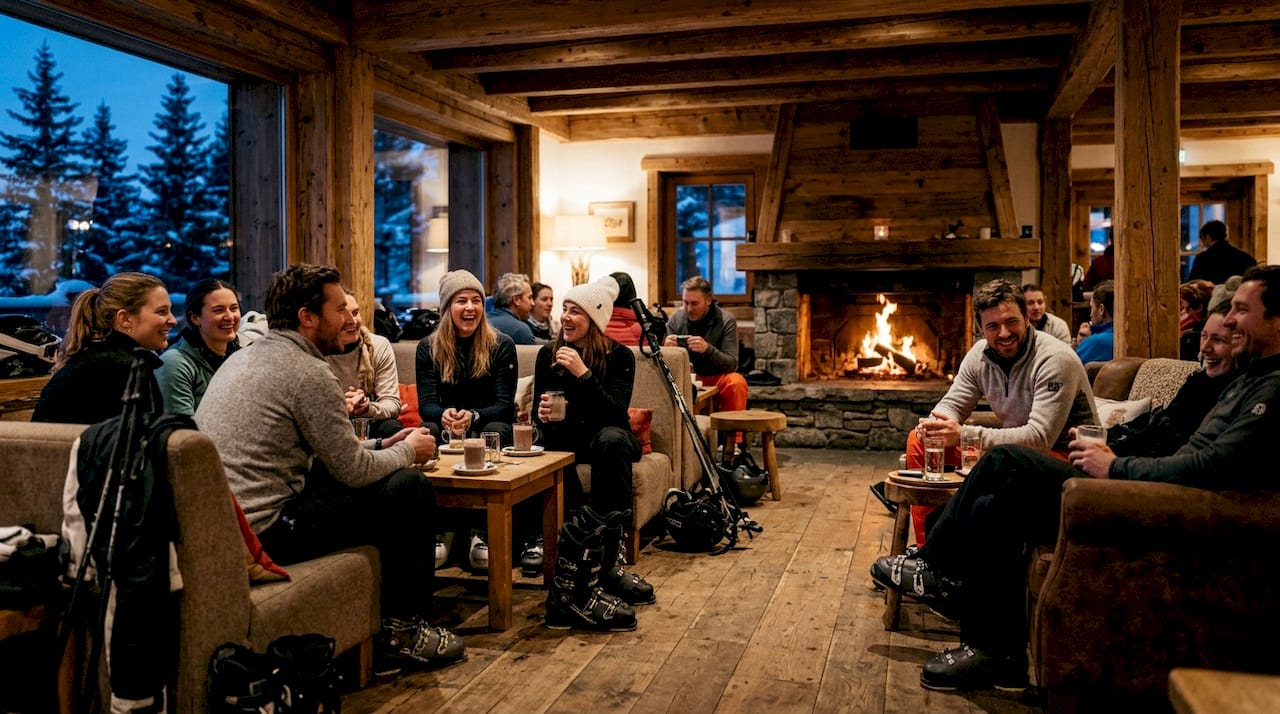
Shared shuttle buses offer the most budget-friendly entry point for solo travellers or pairs travelling light. Services run on fixed schedules, typically departing Geneva Airport several times daily during the ski season. The trade-off is flexibility. You wait for the coach to fill, you share luggage space, and your drop-off point may not be your accommodation door.
The train and bus combination is the most scenic route but also the most complicated with ski equipment. You travel by TGV or regional train from Geneva to Bourg-Saint-Maurice, then transfer to a local bus or taxi up to Val d’Isère. Train luggage racks have limited space, and double board bags fit best in the middle carriages near the bike storage area. Factor in at least one connection and a total journey of over four hours.
Taxis from Geneva are available but expensive for the full distance. They suit last-minute travellers or those arriving outside shuttle timetables. Local resort taxis within Val d’Isère cover areas not served by the internal shuttle.
Here is a quick breakdown of the main options:
Private transfer: Door-to-door, luggage-friendly, fixed price, fastest option
Shared shuttle: Budget-friendly, fixed timetable, shared luggage space, variable drop-off
Train plus bus: Scenic, cheapest, most complex with ski gear, slowest overall
Taxi: Flexible, expensive, good for last-minute or off-timetable arrivals
Pro Tip: Book your transfer before you book your ski hire. Transfer availability during peak weeks in february and march fills up faster than most travellers expect.
How do costs and travel times compare across transfer methods?
The cost of a Geneva to Val d’Isère transfer varies significantly by mode. Shared shuttles start at around €45–€55 per person, while private transfer vehicles for 2026 range from approximately €280 to over €480 per vehicle depending on capacity and service level. That price difference looks large until you split a private vehicle across four or six passengers, at which point the per-person cost becomes comparable to a shared shuttle.
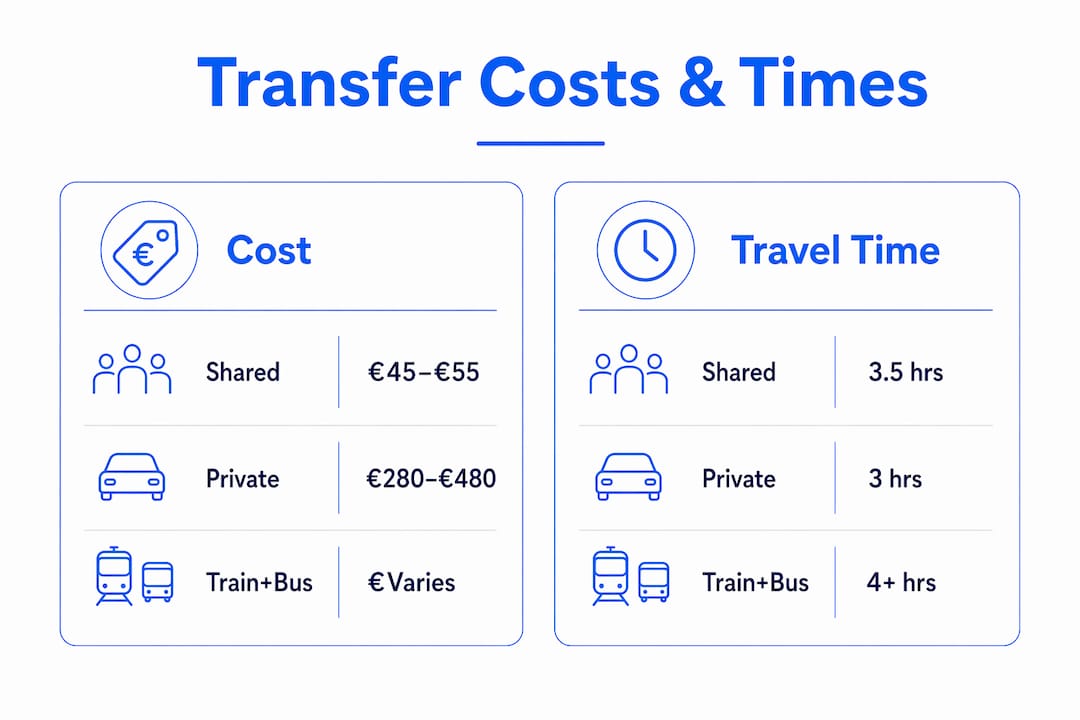
Transfer method | Typical cost | Average travel time |
Private transfer | €280–€480 per vehicle | ~3 hours |
Shared shuttle | €45–€55 per person | ~3.5 hours |
Train plus bus | €30–€60 per person | 4+ hours |
Taxi | Variable, often €400+ | ~3 hours |
Private transfers take around 3 hours, shared shuttles around 3.5 hours, and the train and bus combination over 4 hours including connections. Those differences matter when you land at midday and want to ski the afternoon session.
Seasonal timing adds another layer. On busy winter Saturdays, transfer times can increase by 30 to 60 minutes due to traffic congestion near Bourg-Saint-Maurice. Saturday is the classic changeover day for weekly chalet bookings, which means every road into the resort is busier. Private transfers with experienced drivers who know alternative routes handle this better than shared coaches locked into fixed schedules.
Pricing models also differ. Private transfers typically use fixed fares quoted at booking, so you know the total cost upfront. Shared shuttles use per-person pricing that can rise during peak dates. Taxis use metered or negotiated rates that are rarely the cheapest option.
Pro Tip: Book early for peak season to avoid walk-up premium rates. January and february school holiday weeks are the hardest to secure at standard prices.
What luggage and ski gear considerations affect your transfer choice?
Luggage volume is the single biggest practical factor separating private transfers from shared options. A family of four with two sets of skis, four suitcases, and a bag of boots simply cannot board a shared shuttle without stress. Private vehicles are sized for exactly this kind of load, with dedicated boot space and roof racks where needed.
On shared coaches, position matters. Standing near the far end of the coach rank at Geneva Airport increases your chances of loading first, which means your bags go in first and come out last. That sounds minor until you are standing in a car park at 10pm trying to locate your ski bag under someone else’s luggage.
For train travel, the luggage challenge is real. Double board bags belong in the middle carriages near the bike storage area, where there is more floor space. Standard overhead racks cannot accommodate ski bags, and leaving equipment in the aisle creates problems for other passengers and train staff.
Here are the key luggage tips to carry with you:
Private transfer: Confirm vehicle capacity and boot space when booking, especially for groups with more than two sets of skis
Shared shuttle: Arrive at the coach rank early and position yourself near the luggage doors for faster loading
Train: Use the middle carriages for board bags; book a seat near the bike storage area
At Val d’Isère drop-off: Position yourself near the right side luggage doors at the main roundabout to retrieve gear fastest and board the resort shuttle first
For a full checklist of what to pack for a ski trip, the winter sports packing guide at BagageBoosters covers everything from boot bags to helmet cases.
Pro Tip: Label every bag with your accommodation name and phone number. Shared coaches visit multiple drop-off points, and unlabelled bags occasionally travel further than their owners.
When and how should you book your Geneva to Val d’Isère transfer?
Pre-booking is the single most effective way to control your transfer cost and guarantee availability. Pre-booking avoids walk-up premium rates and secures your slot, which matters most during the busiest ski weeks. Walking up to a transfer desk on a saturday morning in february is a gamble you do not want to take.
Follow this booking sequence for the smoothest experience:
Confirm your flight times first. Your transfer window depends on your arrival time at Geneva Airport, including baggage reclaim and customs.
Choose your transfer type based on group size, luggage volume, and budget using the cost table above.
Book your transfer immediately after booking flights. Peak season slots fill weeks in advance.
Verify resort coverage. Not all shuttle services cover every sector of Val d’Isère, particularly Le Fornet and Le Laisinant. Confirm your accommodation address is within the service area before paying.
Check the cancellation policy. Flexible bookings matter in 2026, when flight disruptions and weather delays remain a real possibility.
Flight monitoring is a feature worth prioritising when comparing private transfer services. A driver who tracks your flight arrival adjusts automatically to delays, so you are not left stranded at arrivals while your transfer window closes. Shared shuttles operate on fixed timetables and will not wait.
Mid-morning flight arrivals minimise border delays and reduce overall transfer time due to lighter traffic. The French-Swiss border crossing is the biggest bottleneck on the route, and early afternoon crossings on peak days can add significant time to any transfer.
Pro Tip: If you are travelling with children, confirm child seat availability when booking. Reputable private transfer services include child seats as standard, but shared coaches rarely carry them.
How do you navigate Val d’Isère after your transfer drops you off?
Val d’Isère is not a single drop-off point. The resort stretches from La Daille at the lower end through the town centre to Le Fornet at the top, and your accommodation location determines how much further you need to travel after your main transfer arrives.
The resort’s internal shuttle, known locally as the Train Rouge, connects the main sectors. It runs regularly during the ski season and covers routes between La Daille, the town centre, and Le Fornet. The Train Rouge requires you to signal the driver and to be aware of luggage handling procedures at each stop. It is free to use and frequent, but it is not designed for large volumes of ski equipment.
Key drop-off and onward transport points to know:
La Daille: Lower resort entry point, good for accommodation near the Funival gondola
Gare Routière (bus station): Central hub for onward connections and taxi pickups
Main roundabout: Primary drop-off for most shared coaches and private transfers
Le Fornet: Upper village, served by the Train Rouge but not always by shared shuttle services
Service coverage varies by accommodation area, and travellers staying in Le Fornet or Le Laisinant should confirm their transfer reaches those sectors. If your transfer drops you at the central roundabout, the Train Rouge covers the final leg. If you are outside the shuttle route, a local resort taxi is the practical solution.
Key takeaways
The best Geneva to Val d’Isère transfer for most ski travellers is a private vehicle booked in advance, offering fixed pricing, door-to-door delivery, and no luggage compromise.
Point | Details |
Private transfers lead on convenience | Door-to-door service with fixed fares suits families and groups with heavy ski gear best. |
Shared shuttles suit solo travellers | Costs start at €45–€55 per person, but timetables are fixed and drop-offs vary by service. |
Travel times differ by method | Private transfers average 3 hours; train and bus combinations exceed 4 hours with connections. |
Book early for peak weeks | January and february school holiday slots fill weeks ahead; walk-up rates are significantly higher. |
Verify resort coverage before paying | Not all services reach Le Fornet or Le Laisinant; confirm your accommodation address at booking. |
Rolands on choosing the right transfer for your ski trip
People always ask me whether a private transfer is really worth the extra cost. My honest answer is: it depends entirely on how much gear you are carrying and how many people are in your group.
Solo travellers on a tight budget do fine on a shared shuttle. You wait a bit, you share space, and you save money that is better spent on lift passes or a good dinner in Val d’Isère. But the moment you add a second person with full ski kit, the maths shifts. Split a private vehicle four ways and you are paying roughly the same as a shared shuttle, but you arrive faster, with no luggage drama, and directly at your chalet door.
The detail most travellers miss is resort coverage. I have seen groups arrive at the Gare Routière at 9pm with six bags and no idea that their accommodation in Le Fornet requires another shuttle leg. That is a miserable end to a travel day. Checking coverage before you book takes two minutes and saves a lot of grief.
For families with young children, private transfers are not a luxury. They are the practical choice. Child seats, no waiting, no shared luggage bays, and a driver who has tracked your flight. That combination is worth every euro when you are travelling with a five-year-old and a boot bag.
My advice for 2026: book your Geneva airport ski transfer the same day you book your flights. The best slots go early, and the mountain does not wait.
— Rolands
Why Alpy is the smart choice for your Val d’Isère transfer
Alpy specialises in private ski transfers from Geneva Airport to Val d’Isère and across the French and Swiss Alps. Every booking includes professional drivers, flight monitoring, and vehicles equipped for ski equipment and family luggage.
Alpy’s all-inclusive pricing means no surprises at the end of the journey. Child seats are available as standard, automated reminders keep you informed before departure, and the booking process takes under three minutes. For the 2026 ski season, early bookings secure the best availability and preferred departure times. Book your Val d’Isère private transfer directly through Alpy and start your ski holiday the right way, from the moment you land.
FAQ
How long does the transfer from Geneva to Val d’Isère take?
Private transfers average around 3 hours, shared shuttles around 3.5 hours, and the train plus bus route takes over 4 hours including connections. Peak Saturdays can add 30 to 60 minutes due to traffic near Bourg-Saint-Maurice.
What does a Geneva to Val d’Isère transfer cost in 2026?
Shared shuttles start at €45–€55 per person, while private vehicles range from approximately €280 to over €480 depending on vehicle size and service level. Split across a group, private transfers often match shared shuttle costs per person.
Do all transfer services drop off at my accommodation in Val d’Isère?
Not all shuttle services cover every sector of Val d’Isère, particularly Le Fornet and Le Laisinant. Always confirm your accommodation address is within the service area before completing your booking.
Should I book my transfer in advance or can I arrange it on arrival?
Pre-booking avoids walk-up premium rates and guarantees availability, especially during busy february and march school holiday weeks. Last-minute bookings are possible but cost more and carry no guarantee of availability.
What is the best arrival time at Geneva Airport to minimise transfer delays?
Mid-morning arrivals reduce border delays and traffic on the transfer route. The French-Swiss border crossing is the main bottleneck, and lighter traffic in the mid-morning window shortens overall journey time noticeably.
Recommended
Comments