
Geneva to Val Thorens: ski gear transfer tips for 2026

TL;DR:
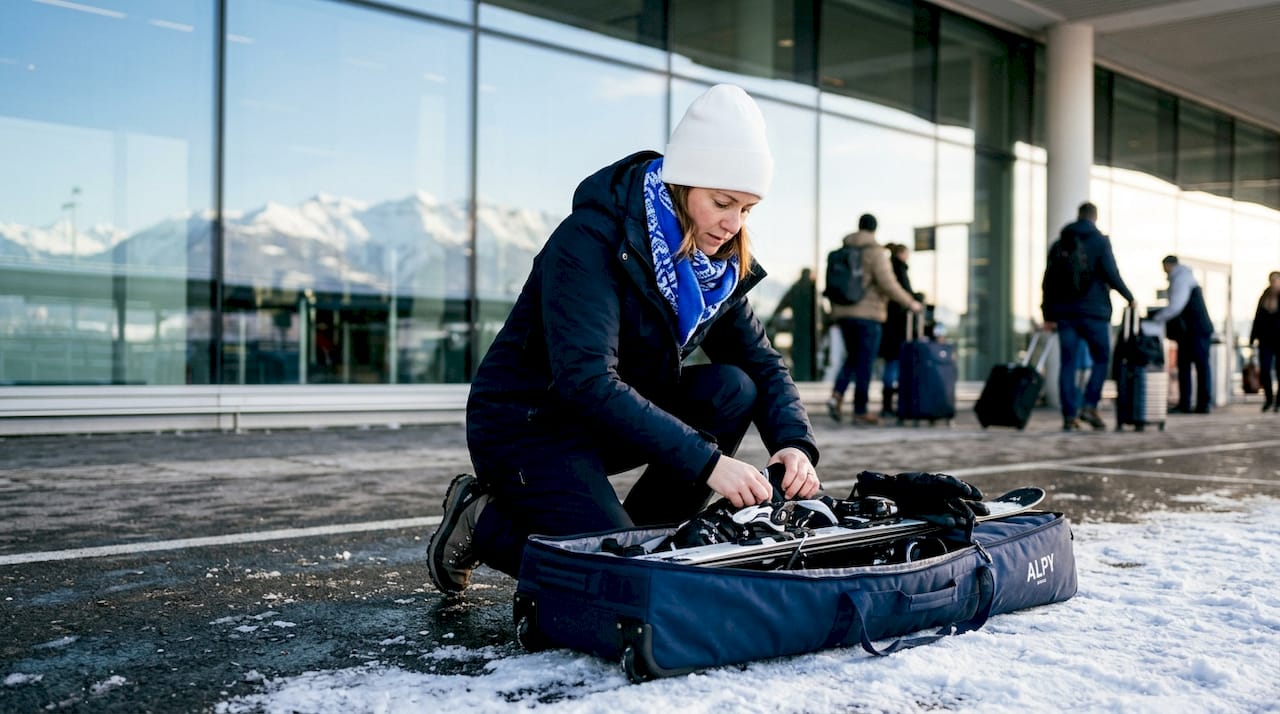
Choosing a private transfer from Geneva to Val Thorens ensures the safest and most reliable transport for ski gear. Traveling mid-week reduces traffic delays, resulting in a smoother, faster journey. Proper packing and early booking are essential for a stress-free start to your ski holiday.
Getting your ski gear from Geneva to Val Thorens without drama is the single most important logistics decision you will make before your 2026 ski trip. The right transfer service handles your skis, boots, and poles as carefully as you handle your first run on a fresh powder morning. Geneva airport ski transfer tips matter more than ever this season, because 2026 airline baggage policies have shifted, road congestion on changeover days is fiercer than before, and families travelling with full kit need a plan before they land. This guide covers every angle: transfer options, airline rules, packing practices, and timing strategies so your gear arrives at Val Thorens ready to carve.
What transfer options are available from Geneva to Val Thorens in 2026?
The Geneva to Val Thorens transfer takes roughly two and a half to three hours depending on road conditions and your chosen mode of transport. Each option handles ski gear logistics differently, and that difference matters enormously when you are travelling with a family’s worth of equipment.
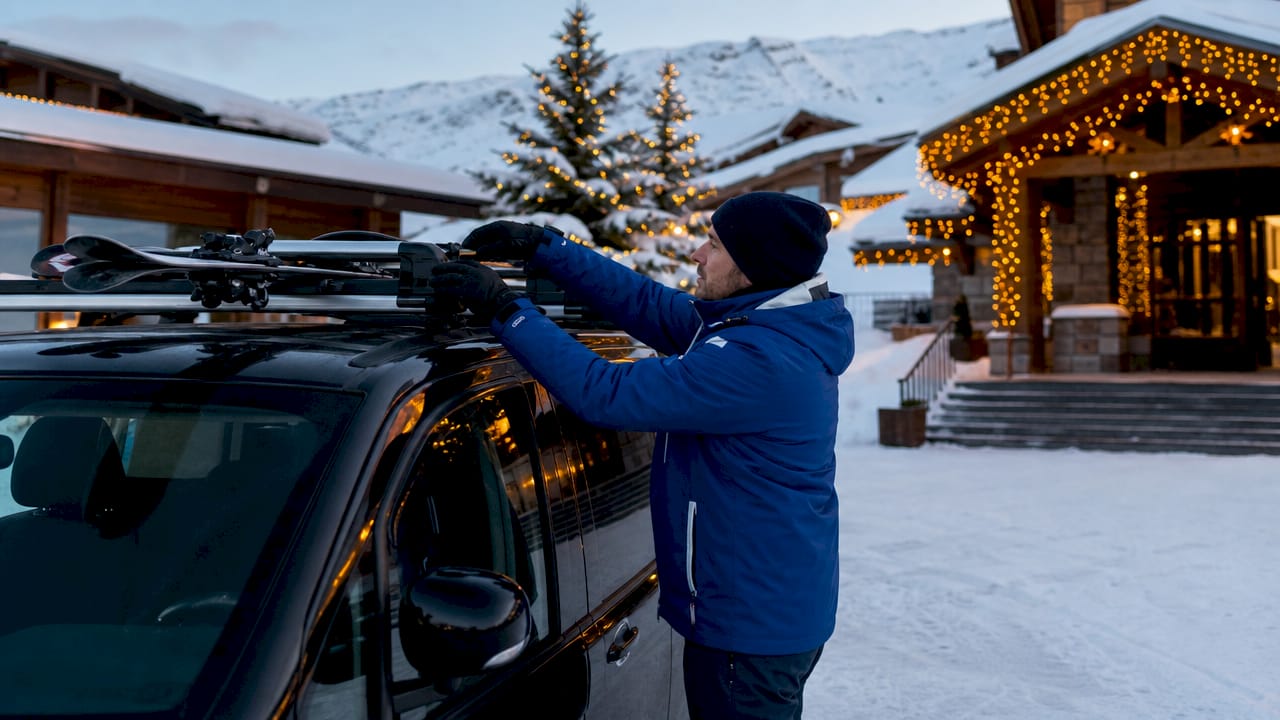
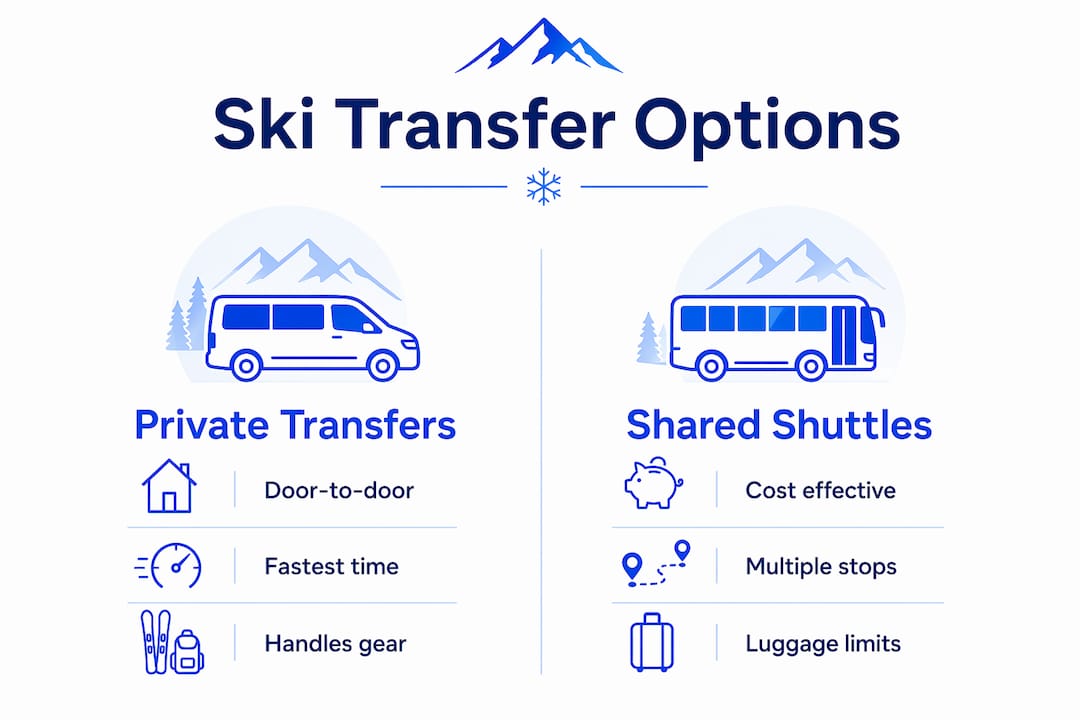
Private transfers are the gold standard for ski gear transport. Door-to-door private service means a driver meets you at arrivals, loads your ski bags, boot bags, and luggage into a winter-ready vehicle, and delivers everything directly to your chalet or hotel in Val Thorens. No stops, no strangers’ bags competing for boot space, no compromise.
Shared shuttle services cost less but come with trade-offs. Luggage limits are stricter, multiple resort stops add time, and your ski bag may end up buried under other passengers’ gear. For a solo traveller on a tight budget, a shared shuttle works. For a family of four with full ski kit, the maths rarely favour it once you factor in the stress.
Train and bus combinations are possible but genuinely awkward with ski equipment. The journey from Geneva involves at least two changes, and manoeuvring a 190cm ski bag through a busy train station is nobody’s idea of a good start to a ski holiday. Car rental gives you flexibility, but winter driving conditions on the mountain roads above Moûtiers demand winter tyres and confident driving skills. A transfer service with an experienced driver removes that risk entirely.
Transport option | Ski gear handling | Approximate journey time | Best suited for |
Private transfer | Excellent, door-to-door | 2.5–3 hours | Families, groups, large kit |
Shared shuttle | Limited, shared space | 3–4 hours | Solo travellers, light luggage |
Train and bus | Poor, multiple changes | 4–5 hours | Budget travellers, minimal gear |
Car rental | Self-managed | 2.5–3 hours | Experienced winter drivers |
How do 2026 airline policies affect ski gear at Geneva Airport?
Most major airlines in 2026 count one pair of skis and boots as a single piece of standard checked luggage without charging extra ski-specific fees. That is genuinely good news. It means your ski bag and boot bag together count as one checked item, provided the combined weight stays within the airline’s limit.
Fees for the first checked bag have risen to around $45 when pre-purchased online on major US and European carriers. Buying your baggage allowance at the airport costs more, so book it online when you purchase your flight. Size and weight limits vary by airline, so check your specific carrier before you pack.
Skis are not permitted in the cabin due to their length. This is a firm rule across all commercial airlines. Ski boots, however, can sometimes travel as carry-on luggage if they are dry and within your airline’s size limits. Carrying boots in the cabin protects them from the baggage hold and reduces the risk of lost equipment.
Key points for Geneva Airport ski gear check-in:
Combine skis and boots into one checked bag allowance where possible.
Pre-purchase baggage online to avoid higher airport fees.
Weigh your ski bag at home before you travel to avoid oversize charges.
Pack boots as carry-on when your airline permits it.
Label every bag with your name, phone number, and Val Thorens address.
Pro Tip: Pack your ski socks, gloves, and base layers inside your ski bag around the skis. This adds cushioning and keeps your checked bag weight efficient without wasting space.
What are the best practices for packing ski gear for the transfer?
Padded ski bags with clothing packed around the skis provide the best protection during both flights and road transfers. A bare ski bag with no internal padding is an invitation for binding damage. The clothing doubles as packing material and saves space in your main suitcase.
Follow these steps for a well-packed ski bag:
Lay skis base-to-base with bindings facing outward to protect the bases from scratching each other.
Wrap bindings individually in a fleece or ski jacket to prevent them from catching on the bag interior.
Secure poles alongside the skis using the bag’s internal straps or a bungee cord.
Fill gaps with soft clothing such as ski trousers, thermals, and mid-layers.
Close and weigh the bag before leaving home, then attach a luggage tag with your full contact details.
Many skiers prefer travelling with their own boots because boot fit is deeply personal and rental boots rarely match the comfort of a broken-in pair. Boots are also harder to replace quickly if lost. Pack them in a dedicated boot bag with a dry bag liner if your boots are damp from a previous trip.
Pro Tip: Photograph your ski bag contents before closing it. If the airline or transfer company damages your equipment, a timestamped photo is your strongest evidence for a claim.
A good wheelie ski bag makes a real difference at Geneva Airport. Rolling your kit through the terminal is far easier than shouldering a heavy bag, especially when you are also managing children, passports, and carry-on luggage.
Does travel timing affect your ski gear transfer to Val Thorens?
Timing your Geneva to Val Thorens transfer is not just about convenience. It directly affects how smoothly your ski gear moves from airport to resort. The Saturday changeover day creates significant road congestion on the route to Val Thorens, adding considerable time to any transfer. Thousands of skiers arrive and depart simultaneously, and the mountain roads above Moûtiers become genuinely slow.
Mid-week travel reduces congestion and makes the entire transfer experience calmer. Drivers have more time to assist with ski gear loading, resort check-in queues are shorter, and you arrive with energy left for the slopes rather than a frayed temper from a four-hour traffic crawl.
Travel day | Typical congestion | Transfer time estimate | Gear handling ease |
Saturday | Very high | 3.5–4.5 hours | Difficult |
Sunday | High | 3–4 hours | Moderate |
Monday to Friday | Low | 2.5–3 hours | Easy |
Early bookings for private transfers lock in availability and often secure better prices. Last-minute bookings face both higher costs and the risk of no suitable vehicle being available for your group size and kit volume. Book your transfer at the same time as your flights and accommodation.
What practical checklist should you follow for a smooth ski gear transfer?
Preparation before you leave home is what separates a stress-free ski trip from a chaotic one. Run through this checklist before every Geneva to Val Thorens journey with ski gear:
Confirm ski luggage policy with your transfer company at the time of booking. Ask specifically how many ski bags and boot bags the vehicle accommodates.
Pre-book your transfer early, particularly for peak weeks in february and march when demand is highest.
Insure your ski equipment for the journey. Standard travel insurance often excludes sports equipment unless you add a specific ski gear extension.
Pack a contingency bag with your ski pass, passport, medication, and one day’s ski clothing in your carry-on. If your checked bags are delayed, you can still ski on day one.
Coordinate your transfer pickup time with your flight arrival, allowing at least 45 minutes for baggage collection at Geneva Airport.
Share your flight details with your transfer company so they can monitor arrival times and adjust pickup if your flight is delayed.
Use a durable duffel bag for ski boots and accessories. Rigid cases protect better but add weight; a well-padded duffel is the practical middle ground for most travellers.
Compare Méribel vs Val Thorens transfer logistics if you are deciding between resorts. Val Thorens sits at 2,300 metres, making it Europe’s highest ski resort. The altitude means exceptional snow reliability, but the final section of road is steeper and more exposed to winter weather than lower resorts.
Key takeaways
A private transfer from Geneva Airport is the most reliable way to move ski gear to Val Thorens comfortably, especially when booked early and timed for mid-week travel.
Point | Details |
Choose private transfers for ski gear | Door-to-door service handles ski bags and boot bags without luggage restrictions. |
Use 2026 airline baggage rules wisely | Skis and boots count as one checked item; pre-purchase your allowance online to save money. |
Pack ski bags with clothing for protection | Wrap bindings in soft layers and fill gaps with ski clothing to prevent damage. |
Travel mid-week to avoid congestion | Saturday changeover day causes major delays; monday to friday transfers are significantly faster. |
Book early and insure your equipment | Early bookings secure vehicle space for gear; ski gear insurance covers damage or loss in transit. |
My honest view on ski gear transfers from Geneva
I have watched a lot of ski trips start badly at Geneva Airport, and the cause is almost always the same: people underestimate how much their gear changes the transfer equation. A couple travelling light can take almost any option. A family of four with two sets of skis, four boot bags, and a week’s worth of luggage needs a vehicle specifically suited to that load.
The mid-week timing advice is not just a nice idea. The difference between a saturday transfer and a tuesday transfer on the road to Val Thorens is genuinely dramatic. I have seen the same journey take two hours forty minutes on a tuesday and nearly five hours on a saturday in february. That is not a small variation. It is the difference between arriving at the resort in time for dinner and arriving exhausted after dark.
The packing mistakes I see most often are skiers who do not wrap their bindings and arrive to find them bent, and families who pack their ski passes in their checked luggage. Keep your ski passes, medication, and one layer of ski clothing in your carry-on. Always. If your bags are delayed by even one day, you will be grateful.
For families especially, the value of a well-organised private transfer is not just comfort. It is the mental space to actually enjoy the start of your holiday rather than managing logistics at every stage. Val Thorens rewards you the moment you step onto the snow. Get there in good shape.
— Rolands
Alpy: private ski transfers from Geneva to Val Thorens
Val Thorens is waiting, and the only thing standing between you and those legendary pistes is the transfer. Alpy provides private door-to-door transfers from Geneva Airport to Val Thorens with experienced drivers, winter-ready vehicles, and full accommodation for ski bags and boot bags.

Alpy monitors your flight arrival in real time, so your driver is there when you land, not the other way around. Pricing is all-inclusive with no hidden charges, and round-trip bookings come with a discount. You can book your Val Thorens transfer directly online in minutes. Alpy also covers transfers to Courchevel, Méribel, Val d’Isère, Verbier, and Zermatt, making it straightforward to plan multi-resort trips from a single booking platform.
FAQ
What is the fastest transfer option from Geneva to Val Thorens with ski gear?
A private transfer is the fastest and most practical option, typically taking 2.5–3 hours with direct door-to-door service and no luggage restrictions.
Can I bring my ski boots as carry-on luggage on a flight to Geneva?
Ski boots can sometimes be carried on if they are dry and within your airline’s size limits. Carrying them in the cabin reduces the risk of lost equipment.
Do airlines charge extra for ski equipment in 2026?
Most major airlines in 2026 count one pair of skis and boots as a single piece of standard checked luggage without extra ski-specific fees, provided the combined weight stays within the allowance.
When is the best time to travel from Geneva to Val Thorens to avoid traffic?
Mid-week travel from monday to friday avoids the saturday changeover day congestion, which can add one to two hours to the journey on busy winter weekends.
How early should I book a private ski transfer from Geneva Airport?
Book your transfer at the same time as your flights and accommodation. Last-minute bookings face higher prices and limited vehicle availability, particularly during peak weeks in february and march.
Recommended
Comments