
Seasonal Pricing for Ski Transfers Explained
Updated: Feb 18
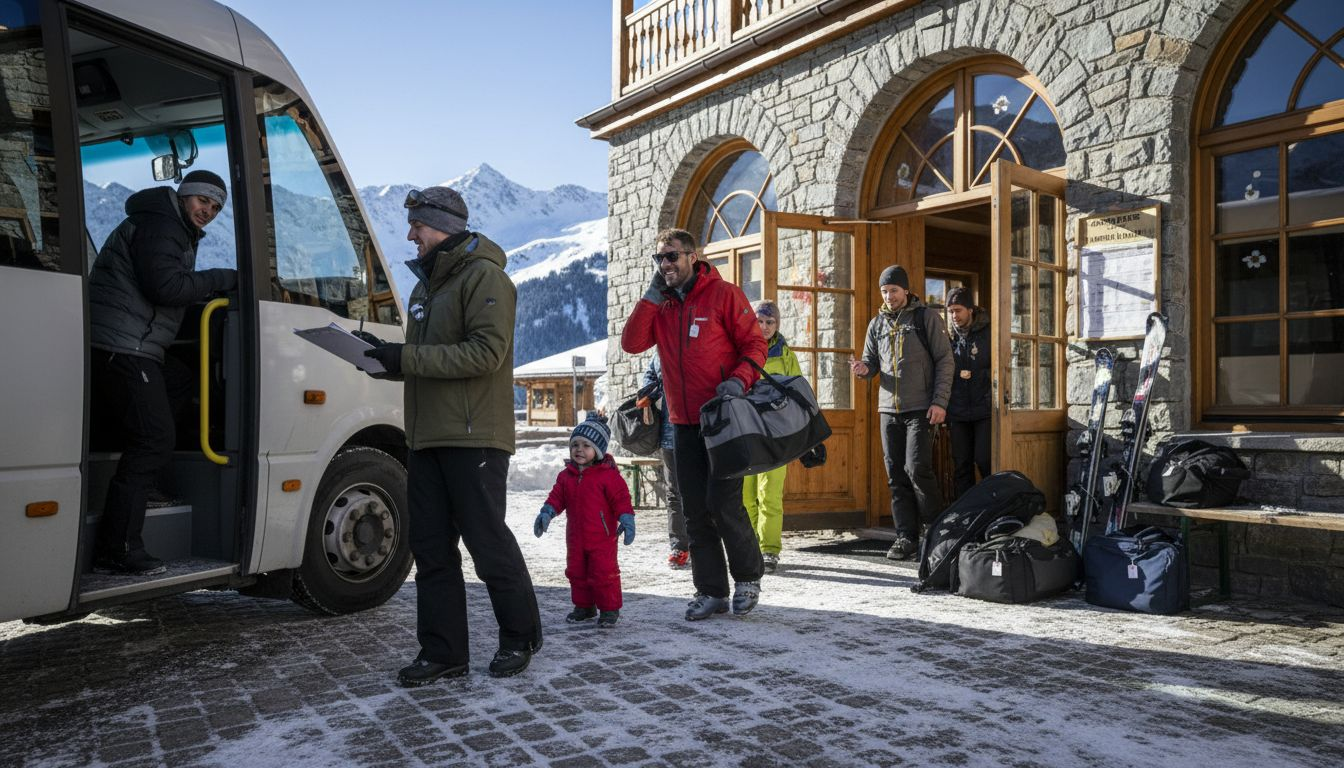
Every British family knows the stress of planning ski holidays when prices seem to leap overnight. Seasonal pricing means transfer costs from Geneva Airport to French resorts like Chamonix or Val d’Isère rise sharply during Christmas, New Year, and February half-term, reflecting high demand and limited availability. Understanding how transfer fares fluctuate depending on travel dates empowers you to anticipate costs, sidestep expensive surprises, and find genuine value for your next family adventure.
Table of Contents
Key Takeaways
Point | Details |
Seasonal Pricing Impact | Transfer costs significantly rise during peak holiday periods and demand spikes, affecting overall holiday budgets for families. |
Advance Booking Benefits | Booking ski transfers at least three weeks in advance can secure lower rates and avoids the premium charges associated with last-minute bookings. |
Dynamic Pricing Variations | Ski transfer pricing fluctuates weekly and daily, with midweek travel generally offering the best value compared to weekends. |
Cost Breakdown Awareness | Understanding additional charges for equipment, child seats, and cancellation policies is crucial to avoid unexpected expenses when booking transfers. |
What Is Seasonal Pricing for Ski Transfers?
Seasonal pricing for ski transfers is a dynamic pricing model where transfer costs vary depending on the time of year you travel to a ski resort. Rather than charging a fixed rate year-round, transfer operators adjust their prices based on demand fluctuations throughout the season. This means your journey from Geneva Airport to a resort like Chamonix or Val d’Isère will cost significantly more during peak holiday periods than during quieter months. Pricing fluctuates across months with peak periods aligned to ski season peaks, holidays, and weekends, directly influencing the average fares travellers pay.
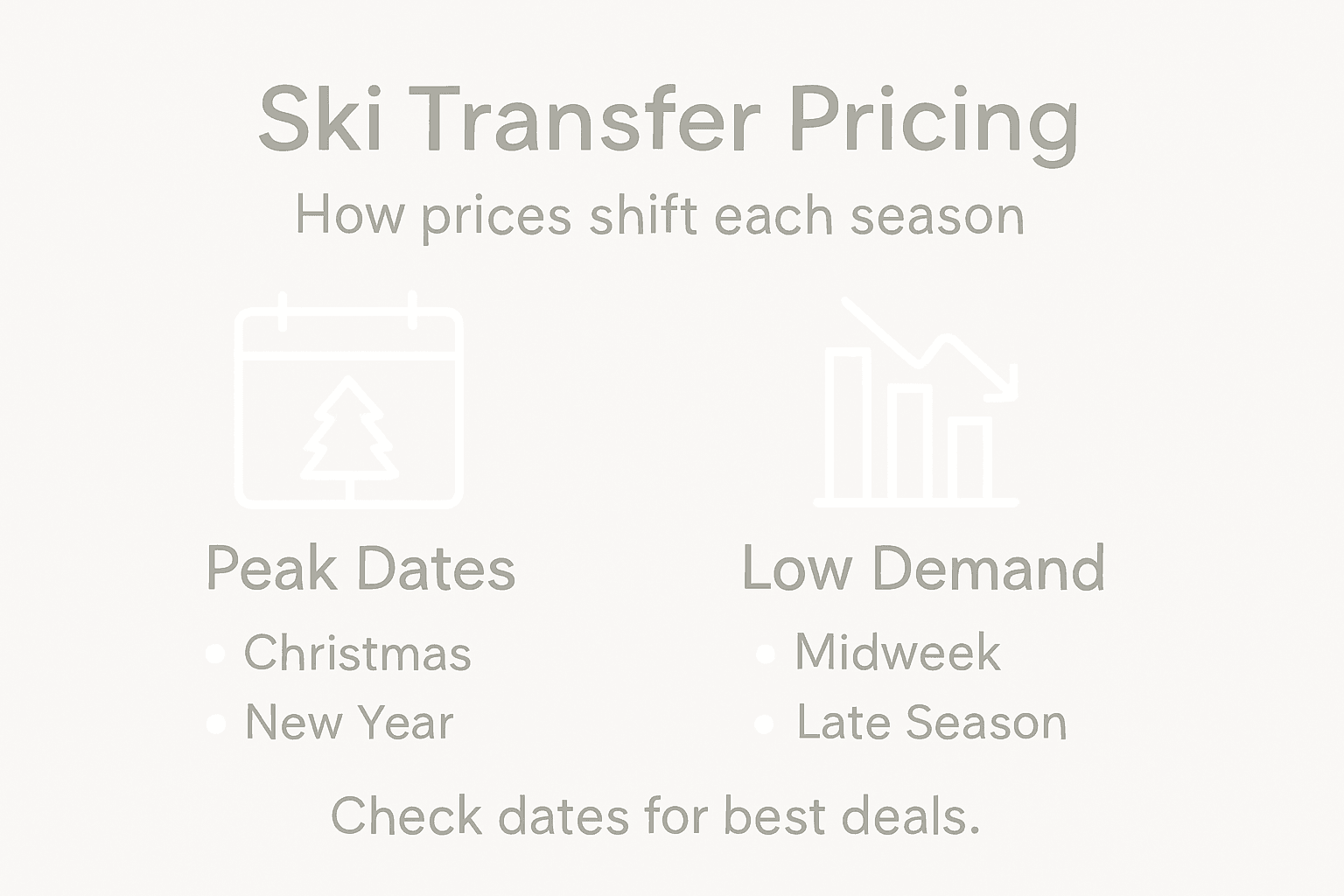
The logic behind seasonal pricing is straightforward: when thousands of British families book ski holidays during school holidays and festive periods, demand for airport transfers skyrockets. Christmas, New Year, and February half-term represent the busiest travel windows, and transfer operators know they can charge premium rates because availability becomes scarce. Weekend transfers cost more than midweek journeys, and travelling during school holidays inflates prices further. Understanding these patterns helps you anticipate what you’ll actually pay and plan your budget accordingly. If flexibility exists in your travel dates, choosing off-peak periods like early December or late March can yield substantially cheaper transfer rates without sacrificing snow quality or resort experience.
What makes seasonal pricing particularly relevant for UK skiers is that it directly impacts your overall holiday costs. A private door-to-door transfer from Geneva that costs £85 during a quiet Tuesday in January might jump to £145 during Christmas week. When you’re planning a family holiday with multiple passengers, these differences compound quickly. The key to managing seasonal pricing is booking in advance during peak periods, which often secures better rates than last-minute bookings when desperation drives prices up. Many transfer services, including those available through ALPY.eu, offer transparent pricing that shows exactly how much your transfer will cost based on your chosen travel date, meaning no surprises when you arrive at the airport.
Pro tip: Book your ski transfers at least three weeks ahead of peak holiday periods to lock in lower rates, and always compare pricing for adjacent dates to identify the sweet spot between good availability and reasonable fares.
How Seasonal Pricing Changes Across Ski Season
Transfer pricing doesn’t remain constant throughout the ski season. Instead, operators adjust prices dynamically based on real-time demand patterns and capacity constraints. This means the cost of your airport transfer fluctuates week by week, and sometimes even day by day, depending on when you’re travelling. Pricing changes reflect intra-week and intra-seasonal variations where prices spike substantially during busy weekends or holiday periods and drop during quieter midweek slots. If you’re travelling from Geneva to Méribel or Les Arcs on a Friday during school holidays, expect to pay considerably more than if you booked the same route for a Tuesday in late January.
The pattern throughout a typical ski season follows a fairly predictable rhythm. Christmas and New Year represent the absolute peak, with transfer prices reaching their highest levels as practically every UK family with school-age children books their holidays simultaneously. February half-term creates another surge in demand and pricing. Conversely, early December before the school holidays kick in sees much gentler pricing, as does late March when most families have returned home. Midweek transfers consistently cost less than weekend equivalents because fewer people are travelling then. This intra-week variation means you could save substantially simply by shifting your departure or arrival day by one or two days. Understanding these temporal patterns allows you to strategically time your booking to capture lower rates without compromising your actual holiday dates significantly.
What makes this dynamic pricing particularly impactful for families is the compounding effect across multiple passengers and potential return journeys. A family of four travelling on different pricing tiers can see substantial savings by adjusting travel dates strategically. If your circumstances allow flexibility, you’ll notice that travelling Tuesday through Thursday typically offers the best value across the entire season. Late March and early April, once the Easter holidays conclude and before spring activities take over, represent a genuine bargain period that many British families overlook entirely. Operators must balance filling available capacity with revenue optimisation, so understanding these mechanics helps you navigate pricing strategically rather than accepting whatever rate appears when you book impulsively.
Pro tip: Compare transfer quotes for a three day window around your preferred dates to identify midweek slots that offer significantly better pricing, particularly outside of school holiday windows where savings can exceed 30 percent.
Types of Pricing Methods Used by Operators
Ski transfer operators don’t all charge in the same way. Different companies employ distinct pricing strategies to manage demand, optimise revenue, and remain competitive within the market. Understanding these methods helps you recognise why quotes vary dramatically between operators and how to identify genuine value. Some operators use static fixed pricing, meaning they charge the same rate regardless of when you book or travel. This approach offers simplicity and transparency, but it often means customers booking during quiet periods subsidise those travelling at peak times. Other operators employ dynamic pricing models that adjust fares continuously based on real-time demand. Dynamic pricing based on demand and capacity represents the most sophisticated approach, where algorithms calculate prices by factoring in current bookings, day of the week, time of day, and proximity to peak season periods.

Beyond these two main strategies, operators frequently use price differentiation to charge different rates for distinct customer segments. For instance, booking a minibus for eight passengers might cost considerably less per person than booking a standard saloon for four. Similarly, booking a transfer months in advance often attracts discounts compared to last-minute arrangements. Vehicle class influences pricing substantially as well. A premium Mercedes with extensive luggage space commands higher rates than a basic sedan, yet both deliver you to your resort reliably. Time-of-day pricing also appears in some operators’ models, with early morning or late evening transfers sometimes incurring surcharges to reflect the inconvenience and additional staffing costs. Group size pricing recognises that larger parties deliver better revenue per vehicle, so family bookings sometimes benefit from lower per-person rates than solo travellers.
When comparing transfer quotes, recognising these pricing methodologies helps you understand whether you’re genuinely getting better value or simply comparing different pricing structures. A seemingly cheaper fixed price might become expensive if you’re flexible on dates, whilst a dynamic pricing operator might offer excellent rates for midweek travel but premium prices for weekends. Some operators combine multiple methods, perhaps using fixed base rates with dynamic surcharges applied during peak periods. The transparency of pricing matters enormously for UK families planning budgets. Quality operators, like those featured on ALPY.eu, display exactly how your quote breaks down and which factors influenced the final price, removing guesswork from your transfer booking.
Here’s a concise comparison of the key ski transfer pricing methods used by operators:
Pricing Method | How It Works | Best For Travellers | Notable Drawback |
Fixed Pricing | Same fare year-round | Simplicity, budgeters | May overpay during off-peak |
Dynamic Pricing | Varies with demand and timing | Flexible date travellers | Can spike on popular dates |
Price Differentiation | Adjusts for group size and vehicle | Families, larger groups | Can be complex to compare |
Time-of-Day Pricing | Extra for early/late transfers | Specific timing requests | Surprises at non-standard hours |
Pro tip: Request detailed pricing breakdowns from operators before booking, asking specifically how your date, time, group size, and vehicle choice affected the quote so you can compare like-for-like across different companies.
Impact on Costs for Geneva Airport Families
For UK families departing from Geneva Airport, seasonal pricing creates a genuine financial pinch that affects your entire holiday budget. When you book a ski transfer during peak periods like Christmas week, you’re not just paying marginally more than an off-peak rate. You’re paying substantially more for the exact same journey, often by 50 to 70 percent or occasionally higher. Picture this: a family of four needs two transfers (outbound and return). If each transfer costs £95 during a quiet January week, your total comes to £380. Book those identical transfers during Christmas, and you might face bills closer to £580 or beyond. That extra £200 represents money that could cover additional ski lessons, equipment rental, or genuine après-ski experiences that create lasting memories.
The impact compounds when you consider the unpredictability families face when planning ahead. School holiday dates are fixed, which means timing flexibility becomes limited. Parents cannot simply shift their travel dates to Wednesday when prices drop significantly. Instead, families joining the holiday exodus during school breaks have no choice but to accept whatever premium rates operators charge. This creates an unfortunate dynamic where those most constrained by scheduling pay the highest prices. Single adults or couples without children can cherry-pick the best-priced dates easily. Families with school-age children cannot. Understanding why families choose Geneva ski transfers helps you recognise that seasonal pricing disproportionately impacts family budgets whilst operators benefit from the inflexible demand patterns.
However, knowledge transforms this situation from frustrating to manageable. Families booking months in advance during peak periods can sometimes access early-bird discounts before prices spike. Some operators offer fixed rates if you commit early enough, locking in Christmas prices even if market rates increase later. Comparing quotes across multiple operators becomes absolutely essential, as pricing strategies vary dramatically. One company might apply a 40 percent weekend surcharge whilst another charges steadily throughout the week. Group bookings sometimes attract loyalty discounts when combining outbound and return transfers. Understanding the specific cost breakdown for your journey means you can identify genuine value rather than assuming all quotes represent equivalent service levels.
Pro tip: Book your Geneva Airport ski transfers at least six weeks before peak holiday periods and request specific pricing for adjacent dates to identify the sweet spot where availability remains good but rates haven’t yet reached absolute peak levels.
Finding Value and Avoiding Common Pitfalls
Locating genuine value in ski transfers requires understanding what genuinely matters for your specific situation rather than simply chasing the cheapest quote available. Many families make costly mistakes when booking transfers, either overpaying through poor timing or selecting options that create unexpected hassles. The most effective approach starts with recognising that booking transfers early and being flexible with travel dates delivers measurable savings. Early booking, particularly three to four months ahead for peak periods, often unlocks early-bird discounts before seasonal pricing accelerates. However, early booking only works if you have flexibility. If your dates are absolutely fixed by school schedules, focus instead on securing transparent pricing quotes from multiple operators and comparing genuine apples-to-apples.
One commonly overlooked pitfall involves hidden costs that transform seemingly bargain quotes into expensive experiences. Many families book budget private transfers only to discover that ski equipment handling incurs extra charges, child seats cost additional money, or luggage surcharges apply for families travelling with substantial gear. Shared transfers sometimes present better value than private options for families, particularly if you’re comfortable with brief extra stops. Yet many families automatically assume private transfers cost more without actually comparing shared options properly. Another frequent mistake involves ignoring cancellation policies entirely. Ski holidays involve weather uncertainty and potential illness. Operators with strict no-refund policies might seem cheaper until weather forces you to reschedule. Understanding whether an operator offers flexible rescheduling or full refunds under specified circumstances protects your entire holiday investment, not just the transfer cost.
Finding genuine value also means recognising what separates premium operators from budget alternatives. The cheapest quote frequently comes from operators with minimal safety standards, unreliable vehicles, or drivers unfamiliar with Alpine winter driving. For UK families travelling with children, reliability and professional service matter enormously. A transfer that arrives late or breaks down creates cascading problems throughout your holiday. Quality operators provide flight monitoring so drivers track delays automatically, offer child seats as standard rather than extras, and employ experienced Alpine drivers who prioritise safety on winter roads. These attributes genuinely matter for your family’s experience. The difference between a £65 budget transfer and an £85 quality transfer often represents exceptional value rather than poor economics.
Use this quick reference table to spot common extra costs and value features when booking ski transfers:
Extra Charge or Feature | Typical Impact on Cost | How to Avoid Unpleasant Surprises |
Ski equipment handling | £10–£25 per journey | Confirm inclusion in quote |
Child seat | Often £5–£15 each | Request seats in advance |
Luggage surcharge | £10+ for excess bags | Declare bag count when booking |
Cancellation flexibility | Saves entire fare | Choose operators with clear refund policy |
Pro tip: Request itemised quotes from three operators specifically asking whether ski equipment handling, child seats, luggage surcharges, and cancellation policies are included or cost extra, then calculate true total costs rather than comparing advertised base fares alone.
Take Control of Seasonal Pricing with Expert Ski Transfers from Geneva
Seasonal pricing can make ski transfers unpredictable and costly, especially during peak school holidays and festive periods. If you want to avoid last-minute price surges and hidden fees for ski equipment or child seats, it pays to book early with a trusted operator who offers clear, all-inclusive pricing and flexible options. At ALPY.eu, we specialise in private ski transfers from Geneva Airport, designed to give you peace of mind and excellent value regardless of when you travel.
Start your holiday without the stress of unexpected transfer costs. Use our user-friendly booking form to compare transparent quotes for your chosen travel dates and discover how adjusting your itinerary by a few days could save you a significant amount. With professional drivers, modern vehicles, and amenities like flight monitoring and child seats included, ALPY.eu ensures a seamless journey to your ski resort. Book now and lock in your transfer price well ahead of peak demand to enjoy a smoother, more enjoyable ski holiday experience.
Frequently Asked Questions
What is seasonal pricing for ski transfers?
Seasonal pricing for ski transfers is a dynamic pricing model where the costs vary depending on the time of year you travel. Transfer operators adjust their prices based on demand fluctuations throughout the ski season.
How do ski transfer prices change throughout the season?
Prices fluctuate week by week and can vary day by day. Peak periods such as school holidays see significantly higher rates, while quieter times see more affordable options. Midweek transfers generally cost less than weekend ones.
What are the different pricing methods used by ski transfer operators?
Ski transfer operators utilise various pricing strategies such as fixed pricing, dynamic pricing based on demand, price differentiation for group sizes, and time-of-day pricing for transfer services. Each method has its strengths and weaknesses for travellers.
How can families manage costs associated with ski transfers?
Families can manage costs by booking transfers well in advance, being flexible with travel dates, comparing quotes from multiple operators, and being aware of any extra charges related to ski equipment handling or other services.
Recommended
Comments