
All-inclusive ski transfer pricing: what to expect
- PikZiy Studio

- 1 hour ago
- 9 min read

TL;DR:
All-inclusive ski transfer pricing should include tolls, taxes, waiting time, and standard luggage without hidden charges.
Private transfers suit larger groups and families for flexibility and cost-efficiency over shared options.
Booking early and declaring all luggage and requirements upfront ensures transparent pricing and a stress-free journey.
Picture this: you’ve just landed at Geneva Airport, skis strapped to your bags, adrenaline already coursing through your veins at the thought of fresh powder. Then the taxi driver quotes you a price that’s somehow doubled since you booked. Sound familiar? Hidden charges, murky surcharges, and last-minute extras have long been the dark cloud over an otherwise brilliant ski holiday. The good news is that genuinely transparent, all-inclusive ski transfer pricing does exist, and once you understand how it works, you’ll never book blind again. This guide unpacks everything you need to know.
Table of Contents
Key Takeaways
Point | Details |
All-inclusive covers essentials | Most transparent transfer services include tolls, VAT, and basic luggage with no hidden extras. |
Private vs shared matters | Private transfers offer better value for groups, while shared transfers suit solo or budget travellers. |
Timely booking saves money | Booking your transfer 4–6 weeks ahead ensures the best rates and availability. |
Declare extras upfront | Disclose all gear and special needs during booking to avoid surprise charges. |
Transparency builds trust | Opting for truly all-inclusive services leads to less stress and more reliable mountain arrivals. |
What does all-inclusive ski transfer pricing really mean?
Once you understand the promise of all-inclusive pricing, it’s helpful to break down exactly what’s included and what’s not. The term gets thrown around a lot in the ski transfer industry, but not every operator uses it in the same way. True all-inclusive pricing means the figure you see at booking is the figure you pay at drop-off. Full stop.
So what does that actually cover? A genuinely transparent pricing explained model will include:
Road tolls and motorway charges (these can be surprisingly steep on Alpine routes)
VAT and local taxes at the applicable rate
Flight monitoring, so your driver waits if your plane is delayed
Standard luggage allowance, typically 1 suitcase and 1 ski bag per person
Child seats if declared in advance
Door-to-door service from terminal to chalet or hotel
As a benchmark, tolls, VAT, and waiting for delays are all folded into a properly all-inclusive fare, with no extras charged for standard ski gear such as one ski bag and one suitcase per person. That clarity is worth its weight in freshly groomed snow.
What might attract additional charges? Oversized or excess luggage beyond the standard allowance, additional ski bags, snowboards in hard cases, and very large groups requiring a second vehicle can all push costs upward. These are not hidden charges if you declare them upfront. They become hidden charges only when operators bury them in small print or spring them on you at pick-up.
“The price you see should be the price you pay. Anything less than that is not truly all-inclusive.”
The cost breakdown details matter more than most travellers realise. Understanding what each line item covers helps you compare quotes accurately and spot operators who are padding their margins with vague surcharge categories.
Pro Tip: When booking, always list every piece of luggage explicitly, including snowboard bags, boot bags, and children’s equipment. This ensures the operator allocates the correct vehicle size and you avoid any awkward renegotiations at the airport.
Transparency in pricing also has a psychological benefit. When you know exactly what you’re paying, you can budget confidently and focus on what actually matters: planning your first run, choosing your après ski spot, and figuring out who’s doing the cooking at the chalet.
Comparing private versus shared transfers: pricing and value
Now that you know what all-inclusive covers, consider which transfer type fits your group and budget best. The choice between private and shared transfers is one of the most common dilemmas for ski holidaymakers, and the answer is rarely the same for everyone.
Shared transfers pick up multiple groups from the airport and drop everyone at their respective resorts along the way. They’re the budget-friendly option for solo travellers and couples who don’t mind a few extra stops and a slightly longer journey. The trade-off is flexibility. You’re working around other passengers’ schedules, and journey times can stretch considerably.
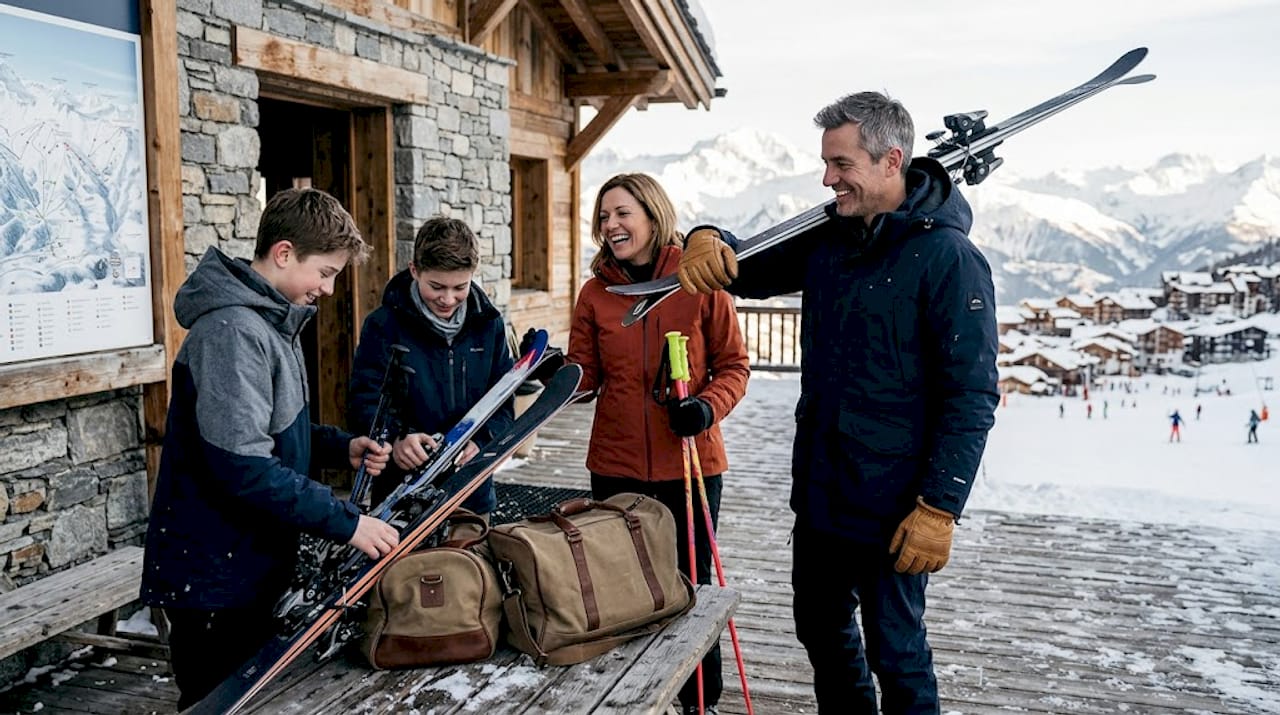
Private transfers are dedicated to your group alone. Your driver meets you, loads your gear, and heads directly to your resort. No detours, no waiting for strangers, no compromise on timing.
The shared vs private transfers question becomes especially interesting when you run the numbers. Consider these 2026 benchmarks for Geneva departures:
Route | Private (total) | Shared (per person) | Private per person (group of 4) |
Geneva to Morzine | €225 to €310 | €29 to €80 | €56 to €78 |
Geneva to Val Thorens | €330 to €480 | €45 to €90 | €83 to €120 |
Geneva to Chamonix | €180 to €260 | €25 to €60 | €45 to €65 |
As these empirical benchmarks show, private transfers become cost-competitive per person for groups of four or more, while shared options suit solo travellers or couples seeking the lowest per-person cost.
Here’s when each option truly shines:
Choose shared if you’re travelling solo or as a couple, you’re flexible on arrival times, and keeping costs minimal is the priority
Choose private if you’re travelling as a family with children, you have lots of ski gear, you’ve had a long-haul flight and just want to get to the resort quickly, or your party is four or more people
Pro Tip: If you’re travelling with young children, family ski transfers via private vehicle aren’t just more comfortable, they’re genuinely less stressful. Child seats, your own schedule, and a direct route make the journey feel like the holiday has already begun rather than an endurance test.
One more thing worth considering: private transfers tend to offer far greater flexibility when flights are delayed. Your driver is tracking your flight and waiting for you specifically. On a shared transfer, if your flight is significantly late, the operator may have to manage multiple group schedules simultaneously, which can complicate things.
What factors affect your ski transfer quote?
Having understood the main options, let’s dig into what shapes your actual transfer price. Even within the all-inclusive model, quotes can vary substantially between operators and bookings. Knowing the levers helps you interpret prices intelligently.
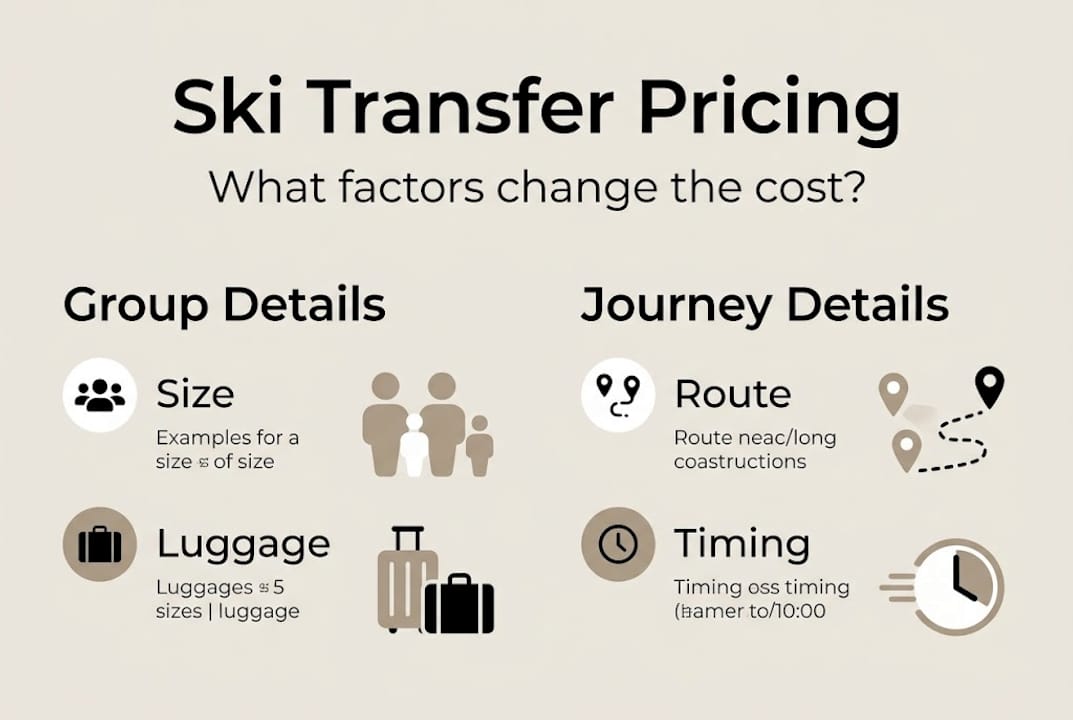
The main factors include:
Party size and vehicle type — Larger groups require bigger vehicles, which cost more to run. A family of six needs a minivan; twelve people need a minibus. The vehicle class directly drives the base price.
Destination distance — Geneva to Morzine is roughly 90 kilometres. Geneva to Val Thorens is over 180 kilometres. Distance is one of the biggest cost drivers.
Time of travel and season — Peak season weeks (Christmas, New Year, February half-term) typically carry higher demand. Early morning or very late night transfers may attract supplements with some operators.
Extras declared at booking — Additional ski bags, snowboard hard cases, baby seats, and booster seats all affect vehicle requirements and sometimes pricing.
Return trip discount — Many operators offer a meaningful discount when you book both directions together.
Let’s bring this to life with a real-world example. Imagine a family of four flying into Geneva from London, arriving at 21:30 with a delayed flight. They have four suitcases, four ski bags, and a toddler requiring a child seat. Here’s how each factor stacks up:
Factor | Impact on quote |
Group of 4 | Minivan required, standard base price |
Geneva to Morzine | Moderate distance, typical range applies |
Late arrival | Flight monitoring included in all-inclusive |
Child seat | Declared at booking, no surprise charge |
4 ski bags (standard) | Covered within allowance |
The key insight: every one of these factors is manageable if declared upfront. Oversized or excess luggage may require a larger vehicle or attract surcharges, but only if you spring it on the driver at the airport. Declare it during booking and the operator simply factors it into the quote.
The ski transfer quote factors also include operator quality. A cheaper quote might reflect a smaller, older vehicle or a driver who doesn’t monitor flights. A higher quote from a reputable provider often reflects a modern fleet, professional drivers, and genuine all-inclusive coverage. Value, not just price, is what you’re really comparing.
Choosing your transfer times wisely also pays dividends. Mid-morning arrivals on non-peak days typically offer the smoothest experience and most competitive pricing.
Booking strategies for best-value and stress-free ski transfers
Once you know how pricing is set, it pays to take control of your booking strategy. The difference between a smooth, affordable transfer and a panicked, overpriced scramble at the airport often comes down to when and how you book.
Here are the key strategies:
Book early. Book 4 to 6 weeks early for the best rates and availability, particularly if you need a specific vehicle size or child seat. Popular routes fill up fast during peak school holiday weeks.
Declare everything upfront. Group size, all luggage items, child seats, booster seats, and any special requirements should all be listed at the time of booking. This ensures the right vehicle is allocated and eliminates the risk of surprises.
Book the return at the same time. Many operators offer a round-trip discount, sometimes as much as 10 to 15 per cent. It also saves you the hassle of arranging your return transfer while you’re on the mountain.
Book directly with the transfer provider. Aggregator platforms can be useful for initial price comparisons, but booking direct often means better communication, more flexibility, and a clearer line of accountability if anything changes.
Confirm your flight details carefully. Provide your accurate flight number so the operator can monitor it and adjust pick-up timing automatically if there’s a delay.
Pro Tip: Long-haul arrivals and families with young children should always prioritise private transfers. The combination of fatigue, jet lag, excited kids, and a mountain of ski gear is not the moment you want to be hunting for a shared minibus departure point.
When organising transfer bookings for a group, appoint one person to handle the booking logistics. Mixed messages from multiple bookers can result in the wrong vehicle size or missing extras. Clarity from the start creates a seamless journey.
Finally, look for providers who offer customisable transfer services — the ability to add child seats, request specific vehicle classes, or schedule stops. These details transform a functional journey into a genuinely enjoyable start to your ski adventure. ⛷️
The overlooked power of true price transparency in ski transfers
After reviewing practical booking strategies, let’s step back and consider why this all really matters. In our experience, the frustration around ski transfer pricing isn’t really about money. It’s about trust.
Families and UK travellers in particular plan ski holidays months in advance, building detailed budgets around every line item. When a transfer operator introduces unexpected charges at the airport, it doesn’t just sting financially. It erodes confidence in the entire booking process and casts a shadow over the start of what should be an exhilarating adventure.
True all-inclusive pricing, with no small print and no exceptions tucked away in obscure terms, does something powerful. It signals that the operator respects you as a customer. It says: we’ve thought about your journey from every angle, and this is what it costs. Nothing more.
The transparent pricing perspective we advocate goes beyond marketing language. It means auditing what ‘all-inclusive’ actually covers before you commit. Does it include flight delay waiting time? Ski bags? Child seats? If an operator can’t answer those questions clearly, that’s your answer.
Savvy travellers scrutinise the small print. Loyal customers return to operators who never needed any.
Book your all-inclusive ski transfer with confidence
You’ve done the hard work of understanding all-inclusive pricing, comparing transfer types, and knowing which questions to ask. Now it’s time to put that knowledge into action and secure a transfer you can genuinely rely on.
At Alpy, every booking reflects genuine price transparency. No last-minute surprises, no murky surcharges. Whether you’re heading to Morzine ski transfers for legendary tree runs or making the epic journey to Val Thorens ski transfers for Europe’s highest slopes, your all-inclusive price is locked in the moment you book. Explore the full range of complete ski transfer options and discover how straightforward a great ski transfer can be. Your adventure starts the moment you land. 🎿
Frequently asked questions
What exactly does all-inclusive ski transfer pricing cover?
It covers tolls, VAT, waiting time for delayed flights, and standard luggage, usually 1 ski bag and 1 suitcase per person. Anything beyond the standard allowance, such as excess bags or oversized equipment, may cost extra.
Is it cheaper to use a shared or private ski transfer?
Shared transfers cost less per person for solo travellers or couples, but private transfers for groups of 4+ become highly cost-competitive and offer a direct, flexible journey with no stops.
How early should I book my ski transfer from Geneva?
Aim to book 4 to 6 weeks in advance to secure the best rates, your preferred vehicle size, and child seat availability, especially during peak ski season weeks.
Do I have to pay extra for ski equipment or large luggage?
No extra charge applies for the standard 1 ski bag and suitcase per person. Oversized or excessive luggage beyond the standard allowance may require a larger vehicle or attract a surcharge, so always declare it at booking.
Why do ski transfer prices vary so much between destinations?
Prices vary based on distance, group size, time of year, and any extras such as additional luggage or child seats. The resort destination itself is one of the largest variables, with longer Alpine routes naturally commanding higher fares.
Recommended
Comments