
How to choose the right vehicle for your ski transfer
- PikZiy Studio

- 2 hours ago
- 10 min read
TL;DR:
Choosing the right vehicle for ski transfers depends primarily on luggage volume, with passenger count being secondary. Confirm that the vehicle is fitted with winter tyres, and always request child seats in advance to avoid delays. Proper planning ensures a smooth transfer experience, allowing you to start your mountain holiday relaxed and ready.
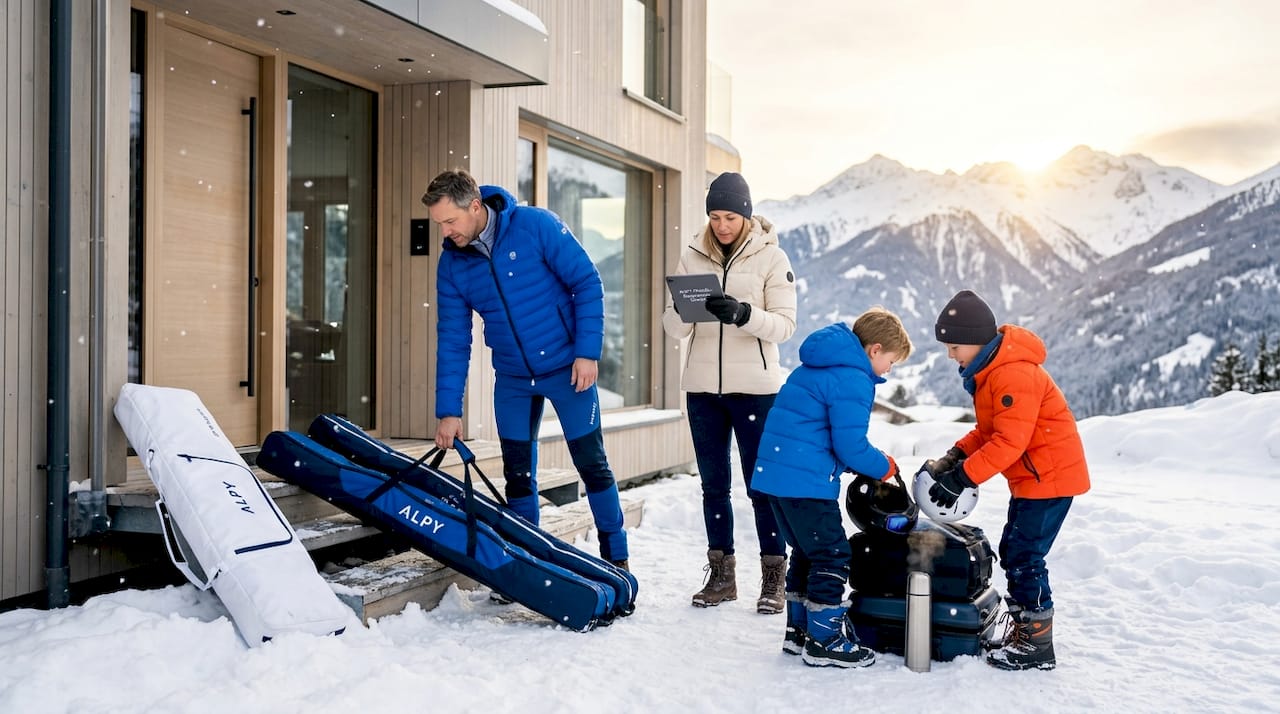
Picture this: you’ve landed at Geneva Airport after a six-hour flight, skis in tow, two excited kids bouncing off the luggage carousel, and your transfer car rolls up. A saloon that fits four. You have six bags, a boot bag, a helmet case, and two ski bags. The mountain hasn’t even come into view yet and the holiday is already crumbling. Knowing how to choose the right vehicle for your ski transfer before you book can save you from exactly that scenario. This guide gives you the planning framework, the vehicle knowledge, and the real-world tips to get it right every time.
Table of Contents
Key takeaways
Point | Details |
Luggage trumps headcount | Always size your vehicle by gear volume first, passenger count second, to avoid curbside chaos. |
Winter tyres beat drivetrain hype | Winter tyres outperform AWD for braking on ice; always confirm tyre type with your provider. |
Book child seats in advance | Child seats are not guaranteed automatically; request them at the time of booking without exception. |
Match the vehicle to road type | AWD with winter tyres suits groomed resort roads; 4WD is the wiser choice for unplowed approach tracks. |
Verify before you travel | Confirm your driver, vehicle spec, pickup point, and luggage arrangements at least 24 hours before departure. |
Choosing the right ski transfer vehicle: key factors first
Before you even glance at a vehicle catalogue, you need to answer four questions honestly. How much gear are you actually bringing? Who is travelling with you? What are the roads like between the airport and the resort? And where precisely will you be picked up and dropped off?
The answers reshape every decision. Here is what each one means in practice:
Passenger count versus real luggage volume. Vehicle size must account for luggage as critically as passenger numbers. A family of four travelling with ski bags, boot bags, helmet cases, and standard suitcases can easily fill a vehicle rated for seven passengers if the boot space is modest. Count every bag before you book.
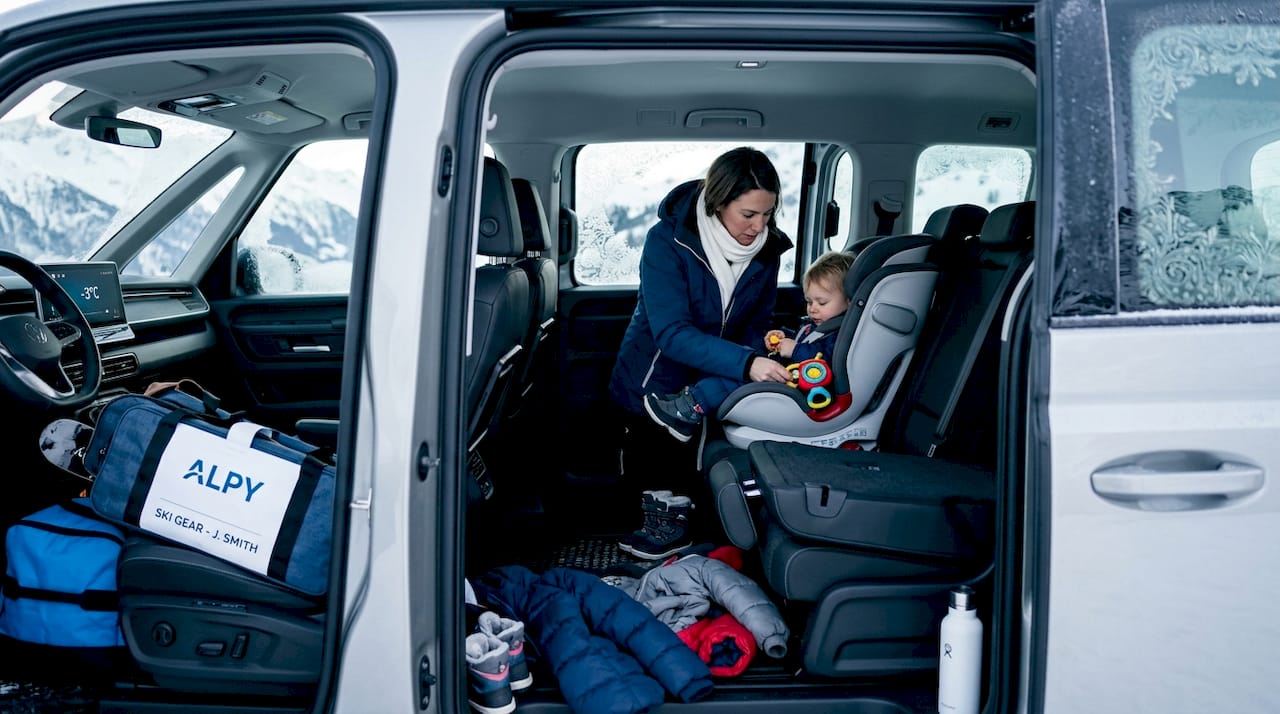
Child seats and booster requirements. If you are travelling with children, child seats must be requested at the time of booking. Providers do not carry spare seats as standard. Missing this step means scrambling at the airport, which is the worst possible start to a powder-chasing adventure.
Road and weather conditions. The approach to most alpine resorts involves some combination of motorway, winding mountain road, and occasionally unplowed final kilometres. For most groomed resort access roads, an AWD vehicle with winter tyres is perfectly adequate. For remote chalets or deep-snow terrain, 4WD becomes genuinely important.
Pickup and drop-off logistics. A large minibus cannot always access narrow village streets or underground car parks. Know your drop-off point and confirm the vehicle can reach it.
Pro Tip: When calculating luggage, lay everything out physically before booking. Ski bags alone are typically 180cm long. Add two per adult traveller and you have already eaten most of a standard estate car’s boot before a single suitcase goes in.
Vehicle types and what they offer ski travellers
Not all ski transfer vehicle options are created equal, and the differences matter more than most people realise. Here is a quick comparison across the most common classes:
Vehicle type | Ideal for | Pros | Watch out for |
Estate car / saloon | Solo travellers, couples, minimal gear | Fuel-efficient, easy to park | Limited boot space for ski equipment |
SUV | Families of 3-4 with moderate gear | Great ground clearance, AWD capability | Boot fills quickly with ski bags |
Minivan (6-8 seats) | Groups, families with lots of gear | Maximum passenger and luggage capacity | May struggle on narrow mountain tracks |
Executive / luxury car | Couples or small groups, premium experience | Heated seats, smooth ride, prestige | Premium price, still limited on luggage |
Large people carrier | Big groups, multi-family trips | Spacious, flexible seating | Needs confirmed access to drop-off point |
Beyond the table, a few features specifically transform a ski transfer into something genuinely enjoyable rather than merely functional. Heated seats matter enormously on a cold January morning after a red-eye flight. Quality LED lighting makes a real difference on pre-dawn mountain roads. Roof cargo boxes, like the Yakima SkyBox NX range (available from 12 to 22 cubic feet), give you meaningful additional storage without sacrificing passenger comfort inside the cabin. Hitch-mounted ski carriers are another option for vehicles without roof rails.
For families travelling with young children, the best vehicles for ski trips combine a generous boot with flexible rear seating, so car seats can be fitted without leaving adults wedged against the door. The family transfer logistics guide from Alpy goes deeper on this specific scenario.
Matching your vehicle choice to conditions and traveller needs
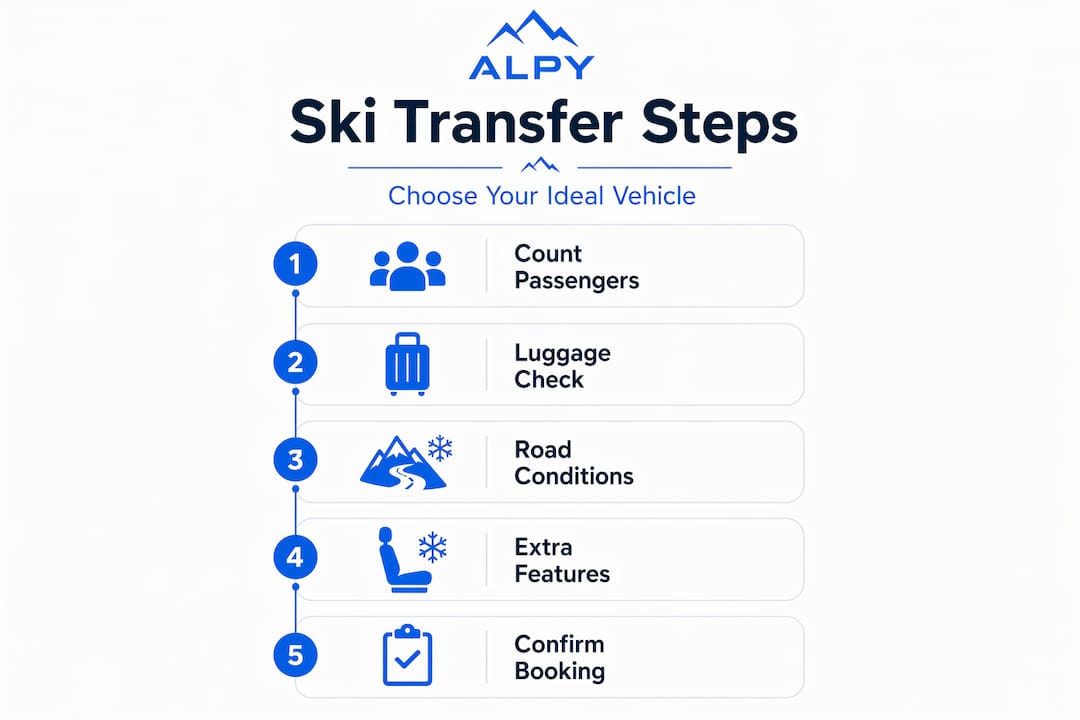
This is where the real decisions happen. Here is a step-by-step approach to selecting your ideal car for winter travel based on your actual trip profile:
Assess your road type. Look up the final approach to your resort. Courchevel 1850, for instance, sits at the top of a steep, winding access road that is regularly plowed but demands confident winter handling. A remote mountain chalet accessed via an unplowed track is a different matter entirely. Knowing last-mile road conditions before selecting your vehicle is one of the highest-leverage decisions you can make.
Choose AWD versus 4WD with clear criteria. AWD with winter tyres handles the vast majority of resort access roads without difficulty. 4WD with low-range gearing is worth requesting specifically for unpaved, deeply snowed-in routes. Do not assume a vehicle marketed as AWD is automatically winter-ready. Always ask.
Confirm winter tyre fitment explicitly. AWD improves acceleration grip. It does not improve braking. AWD does not aid stopping on ice. Winter tyres do. Confirming tyre type with your transfer provider is a higher-leverage safety check than focusing purely on drivetrain specs. Ask directly: “Are the vehicles fitted with winter-rated tyres?”
Calculate luggage space by item, not by assumption. Two ski bags for two adults plus two children’s ski sets, four suitcases, four boot bags, and a couple of day packs fill a minivan with very little margin. Use a checklist. Plan your ski gear storage before booking, not at the kerb.
Book child seats as a non-negotiable item. Treat child seat reservations exactly as you would treat seat reservations on a flight. Child seat reservations are must-have booking elements; failing to specify them causes real delays on arrival.
Consider comfort across the full journey duration. The drive from Geneva Airport to Val d’Isère is roughly two and a half hours. From Geneva to Verbier, around two hours. Legroom, heating, and smooth suspension are not luxuries for those distances. Vehicle comfort features make a measurable difference in traveller satisfaction on longer transfers.
Confirm your exact pickup and drop-off points in writing. A precise address, not just a resort name. Know which terminal, which exit, and which drop-off zone at the resort. Do this at least 24 hours before travel.
Pro Tip: For airport transfer preparation, send your driver a WhatsApp message the evening before with your flight number, passenger count, and a photo of your luggage pile. Drivers who know exactly what they are collecting arrive in the right vehicle, every time.
Common mistakes that derail ski transfers
The research is fairly blunt on this: most transfer problems stem from underestimating luggage, forgetting child seats, and providing incomplete pickup details. Here are the patterns worth avoiding:
Underestimating gear volume. Ski bags are awkward, long, and rigid. They do not compress or stack neatly. Many travellers book a vehicle based on passenger headcount and discover at the airport that the ski bags will not fit. The fix is simple: when you speak to your provider, list every item, not just every person.
Assuming child seats come standard. They do not. Ever. Request them explicitly, specify the child’s age and weight, and ask for written confirmation. This one step eliminates an entire category of transfer stress.
Focusing on AWD while ignoring tyre quality. A premium AWD SUV on all-season tyres is genuinely more dangerous on a glazed alpine road than a front-wheel-drive estate on proper winter rubber. Always ask about tyres.
Providing vague drop-off details. “Méribel village” is not a drop-off address. Your chalet manager will have a precise postal address. Get it before you travel.
Not verifying vehicle specs with the provider. Do not rely on what the website says generically. Call or message and ask specifically about boot size, tyre type, and child seat availability for your booking.
“Ski transfer problems are almost never caused by bad luck. They are caused by assumptions. Verify everything in writing and you remove 90% of the risk before the first snowflake falls.”
Loading and unloading efficiently also saves genuine time. Designate one adult to manage luggage while another keeps children contained. Have ski bags accessible last so they load first into the vehicle. It sounds trivial until you are doing it at 5am in a busy airport drop zone.
What to expect on transfer day ❄️
The hard work is done in the planning. Transfer day itself should feel like the beginning of a great adventure, not a logistical test. Here is how to move through it smoothly:
Meet your driver and check the vehicle immediately. Confirm your name, the destination, and the passenger count before loading anything. Check that child seats are installed and not merely present in the boot.
Verify cargo space before loading. Ask the driver to confirm the boot and roof box arrangement before you start stacking bags. A 30-second conversation here prevents a 20-minute rearrangement later.
Stay flexible if something changes. Occasionally a vehicle change happens due to a maintenance issue or booking adjustment. If an alternative vehicle is offered, quickly assess whether it meets your space and safety requirements before agreeing.
Settle in and enjoy the ride. The crisp peaks of the Alps do not get old, even on your tenth transfer. The door-to-door service means direct, stress-free transport to your resort without connections, shared stops, or timetable anxiety.
Prepare your group for the journey. Snacks, entertainment for children, and layers are worth having accessible in the cabin rather than buried in the boot. Transfers through mountain passes can run warm in direct sun and cold in shadow.
Arrive ready to ski. The whole point of getting the vehicle right is that you step out at your chalet door relaxed, organised, and already thinking about which piste to hit first. That feeling is absolutely worth planning for.
My honest take on ski transfer vehicles
I’ve helped coordinate ski transfers for dozens of families over the years, and the single biggest revelation has been how much luggage consistently surprises people. Every family I’ve worked with has underestimated it. Not because they’re careless, but because ski gear genuinely does not register as “bags” until it is piled at your feet at the airport. My advice is always the same: photograph your kit pile before you leave home and send it to your transfer provider. The visual alone communicates more than any word count.
The child seat issue frustrates me because it is so completely avoidable. I’ve seen families with toddlers arrive at Geneva Airport to find their transfer vehicle has no child seat fitted, because nobody explicitly requested one at booking. The driver was not at fault. The provider was not at fault. It was simply an assumption that caused real distress on day one of a holiday everyone had been anticipating for months.
On the AWD versus winter tyres debate: I will always choose winter tyres on a modest car over all-season tyres on a premium SUV for alpine roads. I’ve experienced both. The winter-shod modest car stops. The all-season SUV slides. That is the reality. When you ask your provider about vehicles, ask about the tyres specifically.
What genuinely transforms a long transfer from Geneva to somewhere like Verbier or Val d’Isère is the combination of proper heating, legroom, and a driver who knows the route. Those three things together make two and a half hours feel like a scenic prelude to the mountain rather than a chore. Get the vehicle right and the whole holiday starts on the right note.
— Rolands
Let Alpy match you with the perfect transfer vehicle ️
You’ve done the thinking. Now let the booking be the easy part.
Alpy specialises in private ski transfers from Geneva Airport to the Alps’ finest resorts, including Verbier transfers, Val d’Isère, Méribel, and Zermatt. Every vehicle in the Alpy fleet is winter-equipped with winter tyres as standard, and child seats are bookable directly through the online form. Experienced drivers monitor your flight in real time, so delays never leave you stranded. Pricing is all-inclusive and transparent from the start. Whether you’re a solo powder-seeker or a family of six with a mountain of kit, Alpy’s ski transfer car booking matches you to exactly the right vehicle for your group. The first turn of the season starts here.
FAQ
What vehicle is best for a family ski transfer?
A minivan or large SUV with AWD and winter tyres is generally the best choice for families, offering the passenger space and luggage capacity that ski equipment demands. Always request child seats at the time of booking rather than assuming they will be available.
Is AWD enough for ski resort transfers?
AWD significantly improves traction during acceleration but does not improve braking on ice. Combining AWD with winter-rated tyres is the recommended setup for most alpine resort roads, with 4WD reserved for unplowed or particularly remote approach tracks.
How do I know if my transfer vehicle has winter tyres?
Ask your provider directly and in writing before the day of travel. Do not assume that winter tyre fitment is standard. A reputable transfer company, like Alpy, will confirm tyre specification as part of its vehicle information.
How far in advance should I book a child seat for a ski transfer?
Book child seats at the same time as your vehicle, ideally several weeks in advance during peak ski season. Specify the child’s age and weight so the correct seat type is confirmed. Last-minute requests frequently cannot be accommodated.
How do I avoid luggage problems on a ski transfer?
List every item you are travelling with, including ski bags, boot bags, helmets, and cases, and share the full list with your transfer provider when booking. Sizing the vehicle by luggage volume rather than passenger headcount alone prevents the most common transfer complications.
Recommended
Comments