
Door-to-door ski transfers: Reliable routes for Geneva travellers

Updated: May 5
TL;DR:
Door-to-door ski transfers pick you directly from the airport to your accommodation, avoiding central drop-offs.
Private transfers offer faster, more reliable, and flexible service, especially during peak seasons.
Booking in advance and providing flight details ensures a stress-free, seamless ski holiday experience.
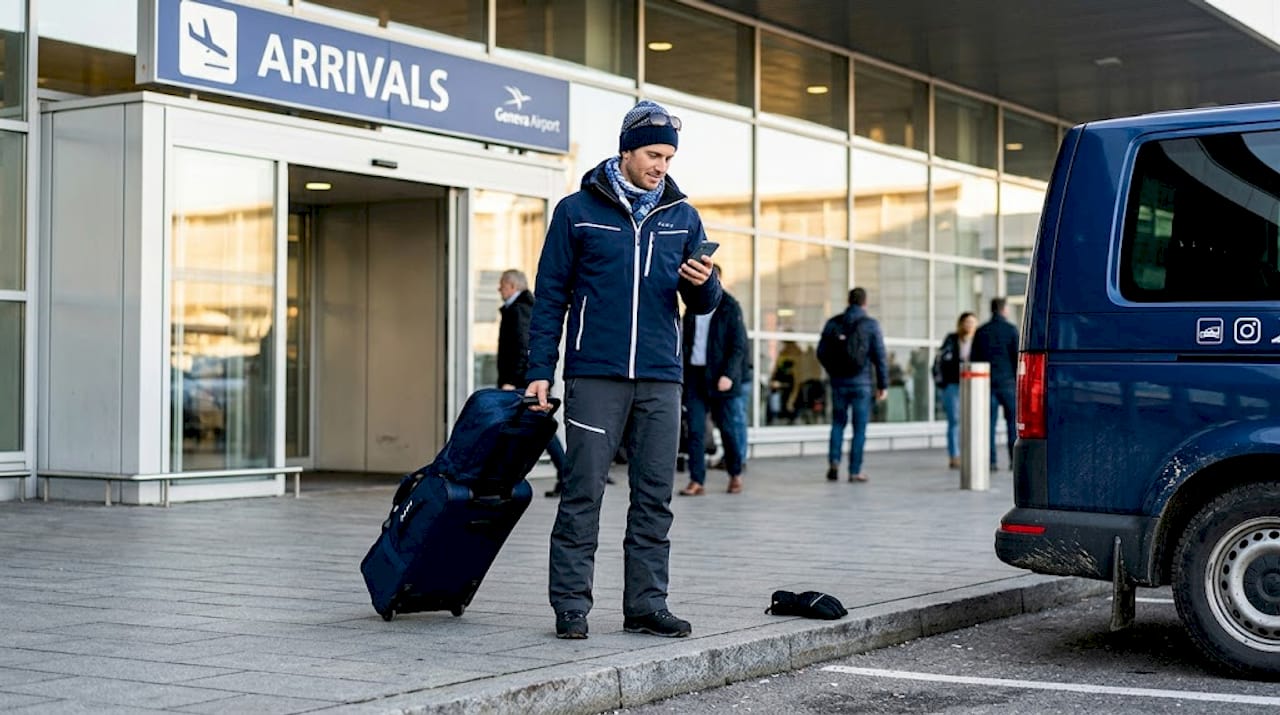
Picture this: you’ve just landed at Geneva airport, skis in tow, ready to carve your first powder turns of the season. Now imagine two possible next chapters. In one, you’re dragging your kit to a shared shuttle stop, waiting forty minutes for other passengers, then sitting through three resort drop-offs before someone finally lets you out at the wrong end of the village. In the other, a professional driver greets you by name at arrivals, loads your equipment, and drives you straight to the door of your chalet. The mountain is waiting. Door-to-door ski transfers make the second story your story, every time.
Table of Contents
Key Takeaways
Point | Details |
Direct access benefits | Door-to-door ski transfers minimise stress by delivering you directly to your accommodation when possible. |
Shared vs private choice | Shared transfers suit individuals and couples, while private offers flexibility and value for groups. |
Booking timing matters | Booking transfers 3-6 months ahead is crucial during peak ski season, especially for private vehicles. |
Reliability varies | Providers generally offer punctual service but shared transfers may be affected by delays and routing. |
Holiday experience enhanced | Investing in a door-to-door transfer can significantly improve slope time and overall holiday enjoyment. |
What is door-to-door ski transfer?
Let’s get the basics right, because “door-to-door” gets thrown around loosely in the ski travel world. A genuine door-to-door ski transfer is a service that collects you from a specific location (almost always the airport arrivals hall) and delivers you as close to your accommodation as road access physically allows. That last qualifier matters, and we will return to it. But the fundamental promise is clear: no central drop-off point, no trudging through slush with a ski bag on your shoulder, and no wondering whether the bus will actually show up.
From Geneva airport, door-to-door services typically cover the major French and Swiss resorts within a two to three hour drive. Think Val d’Isère, Verbier, Méribel, Chamonix, Les Arcs, and Courchevel. The shared ski transfer overview explains how routes are structured, but the short version is that your operator builds the journey around your flight, not the other way around.
There are two broad models: shared and private. Understanding the difference between them is where smart ski travellers save money and sanity in equal measure.
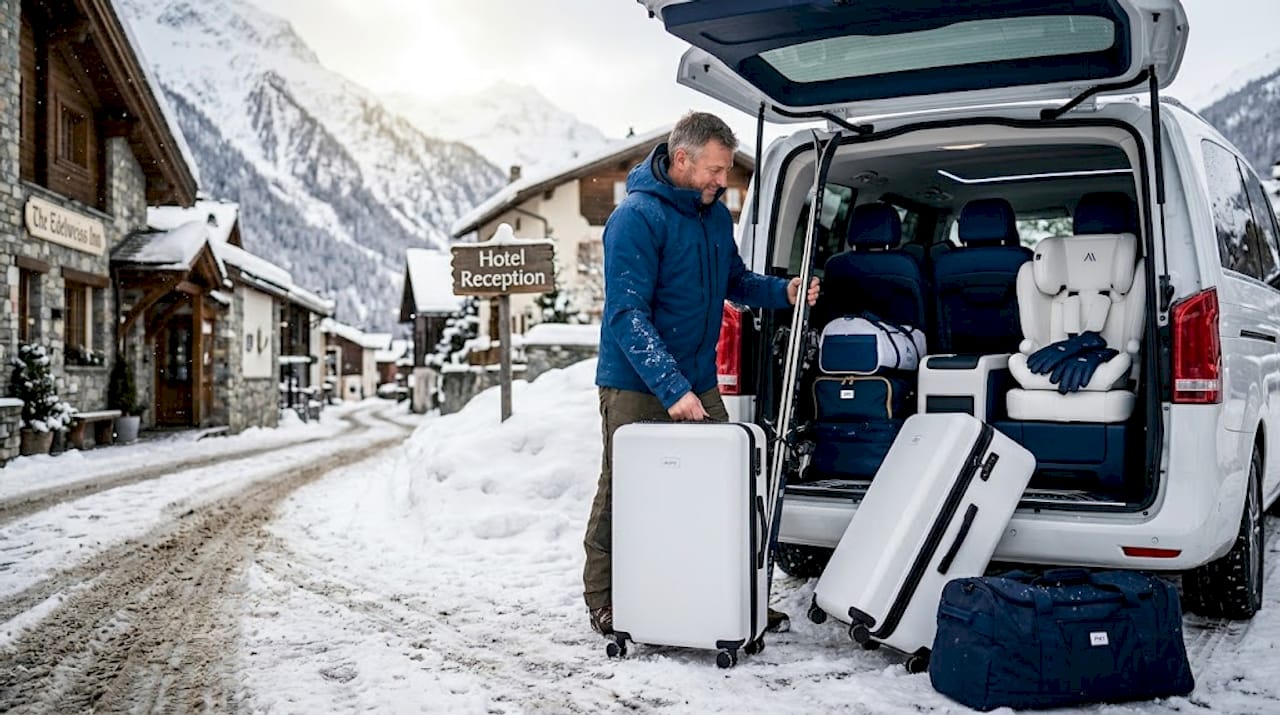
Shared door-to-door transfers work by grouping passengers travelling to the same resort area into a single vehicle. As ski-lifts.com explains, in shared door-to-door transfers passengers may share vehicles with others to the same resort area, involving short airport waits and multiple drop-offs, but aiming for accommodation drop-off where road access allows. You might wait fifteen to thirty minutes at the airport while the operator fills the vehicle, and you may stop at two or three addresses before reaching your own. For solo travellers or couples on a tighter budget, this is a perfectly sensible trade-off.
Private door-to-door transfers, on the other hand, are built entirely around you. According to ski-lifts.com, private door-to-door transfers provide exclusive vehicles, direct non-stop routes timed to flights, with flight monitoring and driver meeting at arrivals. Your driver tracks your incoming flight in real time, adjusts if you’re delayed, and is waiting at arrivals when you walk through the gate. The vehicle doesn’t move until you’re comfortably seated.
“The best ski transfers feel invisible. You stop thinking about logistics and start thinking about which run to ski first.”
A good operator also handles your ski equipment with care, offers child seats on request, and can accommodate large ski bags and boot bags without blinking. The direct resort transfer guide breaks down exactly what to expect on popular Geneva routes.
Comparing shared and private ski transfers
Now you’ve learned what these transfers are, let’s examine how shared and private options differ and which suits different types of travellers.
Feature | Shared transfer | Private transfer |
Price per person | €35 to €110 | Lower per head for groups |
Vehicle | Shared minibus | Exclusive car or minibus |
Airport wait | 15 to 45 minutes | None |
Drop-off stops | Multiple | One (yours) |
Flight monitoring | Sometimes | Always |
Ideal for | Solos, couples, budget travellers | Families, groups, peak season |
Flexibility | Low | High |
Costs for Geneva ski transfers break down roughly like this: shared transfers run between €35 and €110 per person (for example, €50 to €70 per person on the Geneva to Val Thorens route), while private transfers cost €300 to €600 per vehicle, making them considerably better value for groups of four or more. Divide a €400 private vehicle among five passengers and you’re looking at €80 each, often with a faster, more comfortable journey than the shared option.
So, which is right for you? Here’s a practical breakdown:
Choose shared if you’re travelling solo or as a couple, you’re comfortable with a small airport wait, your budget is the priority, and your accommodation is in a well-served resort centre.
Choose private if you’re travelling with children or elderly passengers, you have a lot of ski kit, you’re heading somewhere less central, or you simply value the seamless experience and direct group ski transfer cost savings.
According to ski-lifts.com, shared transfers suit solos and couples on a budget, while private is ideal for families and groups who value time and flexibility, especially on longer hauls or during peak season. That “especially during peak season” point is worth emphasising. When Geneva airport is buzzing with hundreds of ski travellers at Christmas or February half-term, shared services can be stretched. Delays compound. Private transfers bypass that chaos entirely.
Pro Tip: If you’re booking for a group of four or more, always get a quote for a private transfer before defaulting to shared. The ski transfer cost factors article shows why private often works out cheaper per head than you’d expect, especially when you factor in the time saved.
Reliability and practical considerations
After comparing your options, it’s important to weigh reliability and practical booking factors that influence your journey.
Reliability in ski transfers isn’t just about turning up on time. It’s about how an operator handles the unexpected: a delayed flight, a motorway closure near Albertville, a snowstorm on the Col des Aravis. The best providers build contingency into their operations. Flight monitoring is the clearest example: a good operator knows your flight is delayed before you land, and they adjust accordingly without you having to make frantic phone calls from 30,000 feet.
Real traveller feedback tells a useful story here. Alps2Alps reviews on TripAdvisor show providers like Alps2Alps hold a 4.5 out of 5 rating across 1,226 reviews, praised widely for punctuality, though some complaints mention delays and routing on shared services. That pattern is consistent across the industry: private transfers score more consistently on reliability, while shared services attract more mixed feedback due to the inherent complexity of coordinating multiple passengers and drop-offs.
Here are the practical factors that most affect reliability on Geneva routes:
Road access to your accommodation. As ski-lifts.com notes, service is available only where road access allows; remote chalets may receive resort drop-offs instead. If you’re staying in a high-altitude chalet above the tarmac line, confirm this with your operator before you book.
Flight timing. Very late-night arrivals or early-morning returns can limit shared transfer availability. Check departure times carefully.
Peak period demand. During Christmas, New Year, and February half-term, shared services face their heaviest pressures. Ski transfer reliability benchmarks suggest booking private during these windows for the most predictable results.
Driver experience on Alpine roads. Snow-covered mountain roads require genuine skill. Local operators with Alpine-trained drivers are not just a marketing claim; they’re a meaningful safety advantage.
Vehicle condition and equipment. Modern vehicles with winter tyres, proper ski storage, and working heating make a tangible difference on a two-hour mountain drive in January.
Consideration | Shared impact | Private impact |
Flight delay | High (affects all passengers) | Low (driver adjusts for you) |
Remote accommodation | May get resort drop-off | Best effort, clearer upfront |
Peak season pressure | Higher risk of delays | Isolated from general demand |
Weather disruption | Coordinating multiple stops adds risk | Single route, faster decisions |
The airport transfer advantages guide explores these dynamics in more depth, but the core lesson is simple: know your edge cases before you book, not after you land.
Pro Tip: Always provide your operator with your full flight number, not just your estimated arrival time. This enables real-time monitoring and ensures your driver is at the arrivals hall even if your flight lands early.
Maximising convenience and holiday value
With practicalities covered, let’s explore how these transfers elevate your ski holiday experience and how to make the most of the service.
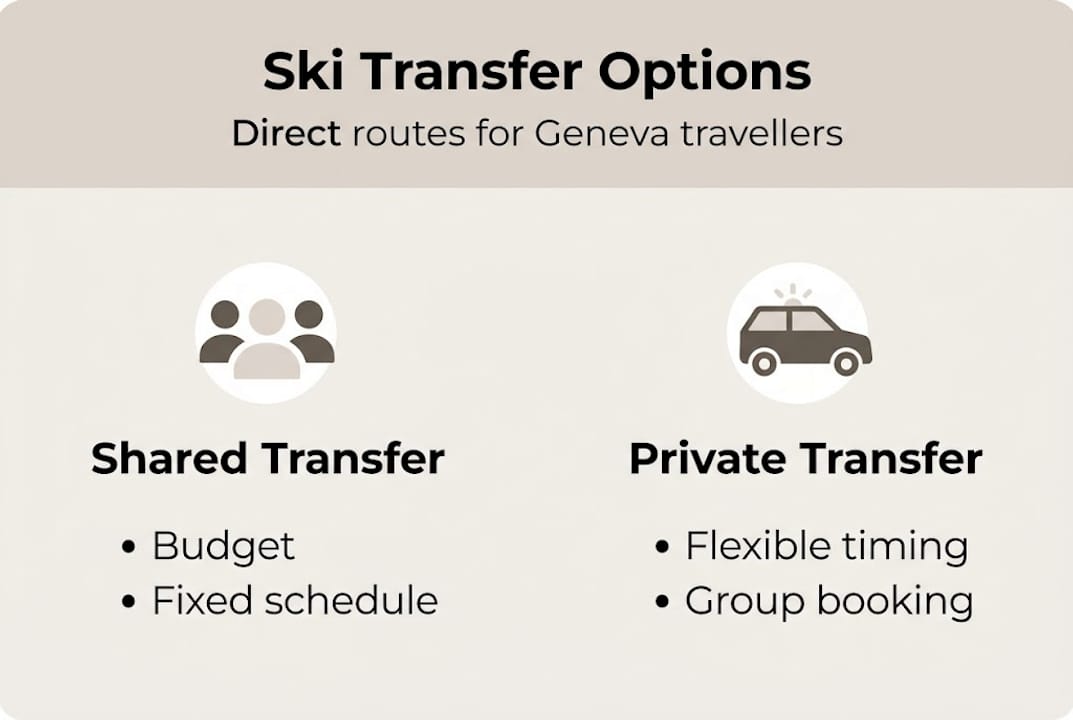
The first and last days of a ski holiday are precious. Most seasoned ski travellers will tell you: travel fatigue on day one is the enemy of great skiing. Arrive stressed, stiff from a long wait at a shuttle stop, and having lugged your ski bag across a resort car park in the dark, and you’ll feel it on the slopes the next morning. A door-to-door transfer removes that tax entirely.
Reducing transfer stress and fatigue is a quantifiable benefit: door-to-door services enhance the holiday start by reducing stress and fatigue compared to shuttles and central drop-offs, making the premium genuinely worthwhile for preserving first and last day slope time. Think of it as buying back two half-days of skiing that you’d otherwise lose to exhaustion. That’s a compelling return on investment.
Here’s how to squeeze maximum value from your Geneva ski transfer:
Book 3 to 6 months ahead for peak season. As ski travel experts advise, booking early and monitoring flight delays via provider apps, alongside choosing local operators for road knowledge, are the top practices among experienced ski travellers. Availability genuinely tightens in December and February.
Use your operator’s communication tools. Many now send automated reminders, driver contact details, and real-time updates. These aren’t just conveniences; they’re confidence builders.
Communicate your group’s needs upfront. Child seats, extra ski bags, surfboard-length powder skis, a pushchair for a toddler. Tell your operator everything. Good providers handle these requests without fuss, but they need to know in advance.
Consider a round-trip booking. Many operators, including those listed on smart ways to save on ski transfers, offer meaningful discounts for return bookings made together. It’s often 10 to 15% off the total cost.
Choose a local operator with Alpine expertise. A driver who knows the D902 around Val d’Isère in February is not the same as someone who has plugged it into a sat-nav for the first time. Local knowledge is a tangible safety benefit, not a marketing phrase.
The airport transfer benefits page outlines why the combination of reliability, comfort, and local knowledge creates a genuinely superior experience to any public or semi-public alternative. Your ski holiday is expensive. The transfer is a small percentage of the total cost, and optimising it pays dividends in energy, enjoyment, and slope time. 🎿
Why the premium is worth it: A fresh perspective
Here’s a view you won’t find on most ski travel blogs: the real cost of a cheap transfer isn’t the ticket price. It’s the invisible tax on your experience. Most travellers calculate transfer value purely on the price per seat. That’s the wrong equation.
Consider a family of four arriving at Geneva at 6pm on a Friday in February. A shared shuttle saves them perhaps €80 compared to a private transfer. But that shared shuttle waits thirty minutes at the airport, stops at two other properties, and arrives at their chalet at 9:30pm instead of 8pm. The children are exhausted. Dinner is rushed. The first morning on the mountain is fogged by fatigue. The airport transfer expert guide illustrates this point vividly: the hidden costs of a slower, more fragmented journey accumulate silently but powerfully.
We genuinely believe that the experience of a door-to-door transfer is not a luxury add-on. It’s the opening chapter of your ski story. Arrive well, and you ski well. The mountain rewards the rested. The crisp Alpine air tastes different when you haven’t spent two hours shepherding tired children through shuttle stops. That €80 saving? It costs more than it saves.
Ready to experience seamless ski transfers from Geneva?
To put this knowledge into action, explore reliable transfer services that turn your ski holiday logistics into a seamless experience.
At alpy.eu, we connect Geneva travellers with professional, door-to-door ski transfers to the Alps’ most celebrated resorts. Whether you’re chasing powder in Verbier or plotting your carves in Val d’Isère, we’ve got your journey sorted. Fancy the legendary terrain of Méribel? We’ll get you there in style. Book your round trip together and enjoy a discount, safe in the knowledge that a professional driver is monitoring your flight before you even board.
Every booking includes all-inclusive pricing, child seat options, and automated reminders so you arrive at the mountain rested, excited, and ready to ski. Your adventure starts the moment you land.
Frequently asked questions
How do door-to-door ski transfers differ from standard shuttles?
Door-to-door transfers aim to drop you directly at your accommodation (where road access allows), whereas standard shuttles typically stop at a central resort point, requiring you to transport your kit the rest of the way yourself.
What types of vehicles are typically used for ski transfers?
Minibuses and private saloon cars are the most common options, selected according to group size and luggage volume, with dedicated ski storage to handle bulky equipment comfortably.
Are shared transfers reliable for late-night arrivals?
Shared transfers can struggle with very late flights or peak-season delays, as ski-lifts.com confirms that these services are not ideal for very late flights or peak delays; private transfers are strongly recommended for late arrivals.
Is booking early necessary for Geneva ski transfers?
Absolutely. Ski travel experts advise booking 3 to 6 months ahead for peak season, particularly for private door-to-door options which fill quickly over Christmas and February half-term.
Does accommodation location affect transfer availability?
Yes, it can. While most hotels and resort apartments are fully accessible, ski-lifts.com notes that remote chalets may only receive a drop-off at the nearest resort point if road access does not permit a full door-to-door delivery.
Recommended
Comments